

Quick Answer
Standing seam metal roofing uses raised, interlocking vertical seams with concealed fasteners, giving it superior wind and water resistance, a cleaner appearance, and a longer lifespan — making it the stronger choice for most homes, especially in hurricane-prone areas. Corrugated metal roofing uses exposed fasteners and a wavy panel profile, and costs less upfront, making it a practical option for garages, workshops, agricultural buildings, or budget-conscious residential projects where the highest wind rating isn’t the top priority. For a primary residence in Florida, standing seam is generally the better long-term investment; for secondary structures, corrugated is often the more sensible one.
Here’s how the two actually compare.
Why Metal Roofing Panel Type Matters More Than People Expect
Homeowners researching metal roofing often assume “metal roof” is a single decision. It isn’t. The panel type and fastening method make a significant difference in how the roof performs over decades, not just how it looks. Two metal roofs can use the same gauge steel or aluminum and still perform very differently in a storm, simply because of how the panels are attached and sealed against each other.
This matters especially in Florida, where wind uplift resistance and water intrusion at seams are the two biggest factors separating a metal roof that performs well for 40+ years from one that needs early attention.
Standing Seam Metal Roofing: Overview
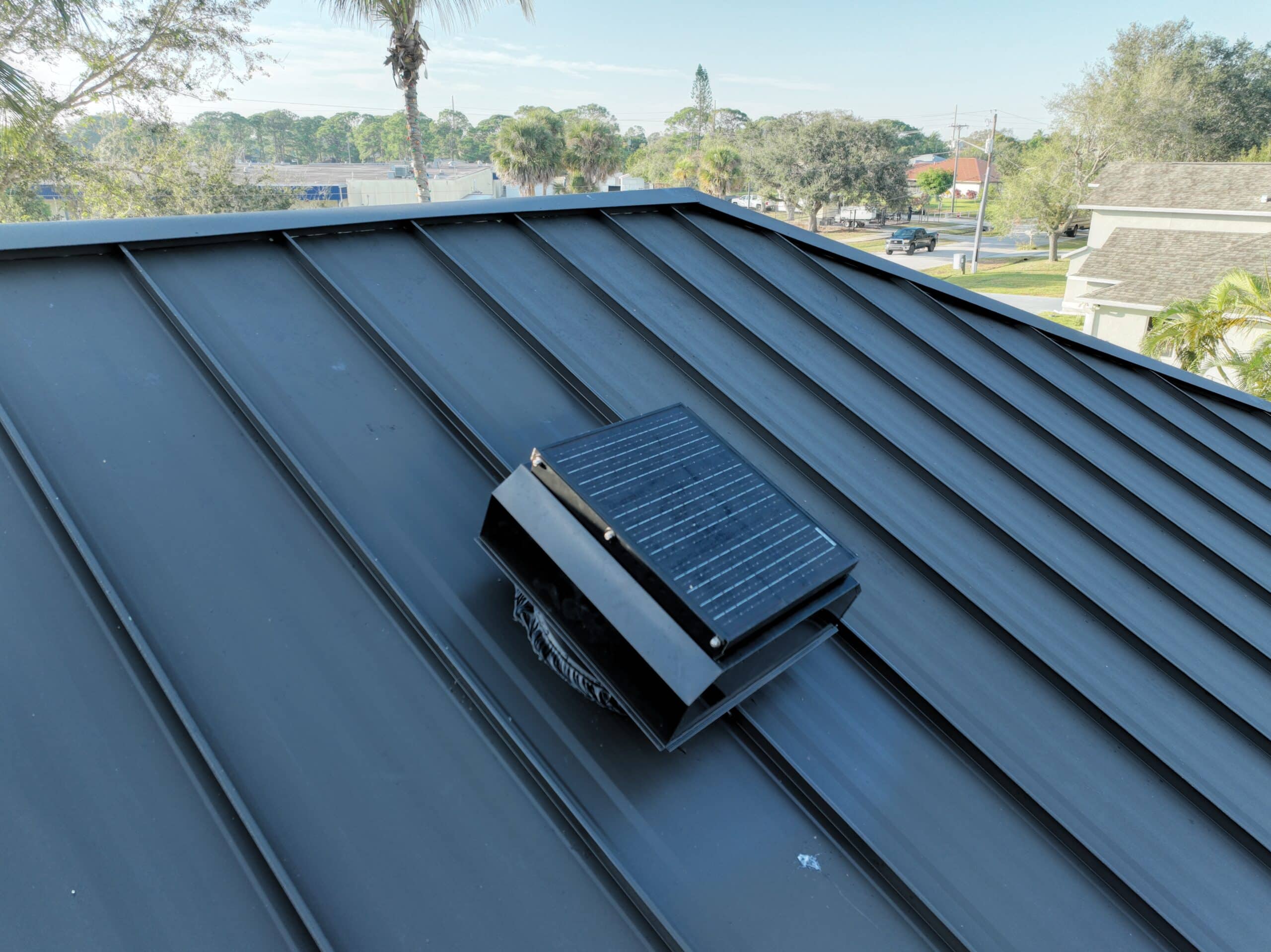
Standing seam panels run vertically up the roof and connect at raised, interlocking seams, typically 1 to 2 inches tall. The fasteners are hidden beneath the seam itself rather than exposed on the panel surface.
Strengths:
- Concealed fasteners mean no exposed screw heads for water to work into over time
- Higher wind uplift resistance, often rated for 140+ mph in properly installed systems, which is a meaningful factor for hurricane-prone regions
- Longer lifespan, commonly 40–70 years with minimal maintenance
- Clean, modern appearance with continuous vertical lines and no visible fastener pattern
- Better thermal movement handling, since the panels can expand and contract with temperature changes without stressing the fasteners
Trade-offs:
- Higher upfront cost, generally the more expensive of the two panel types
- Specialized installation, requiring installers experienced specifically with standing seam systems and proper seaming equipment
Corrugated Metal Roofing: Overview
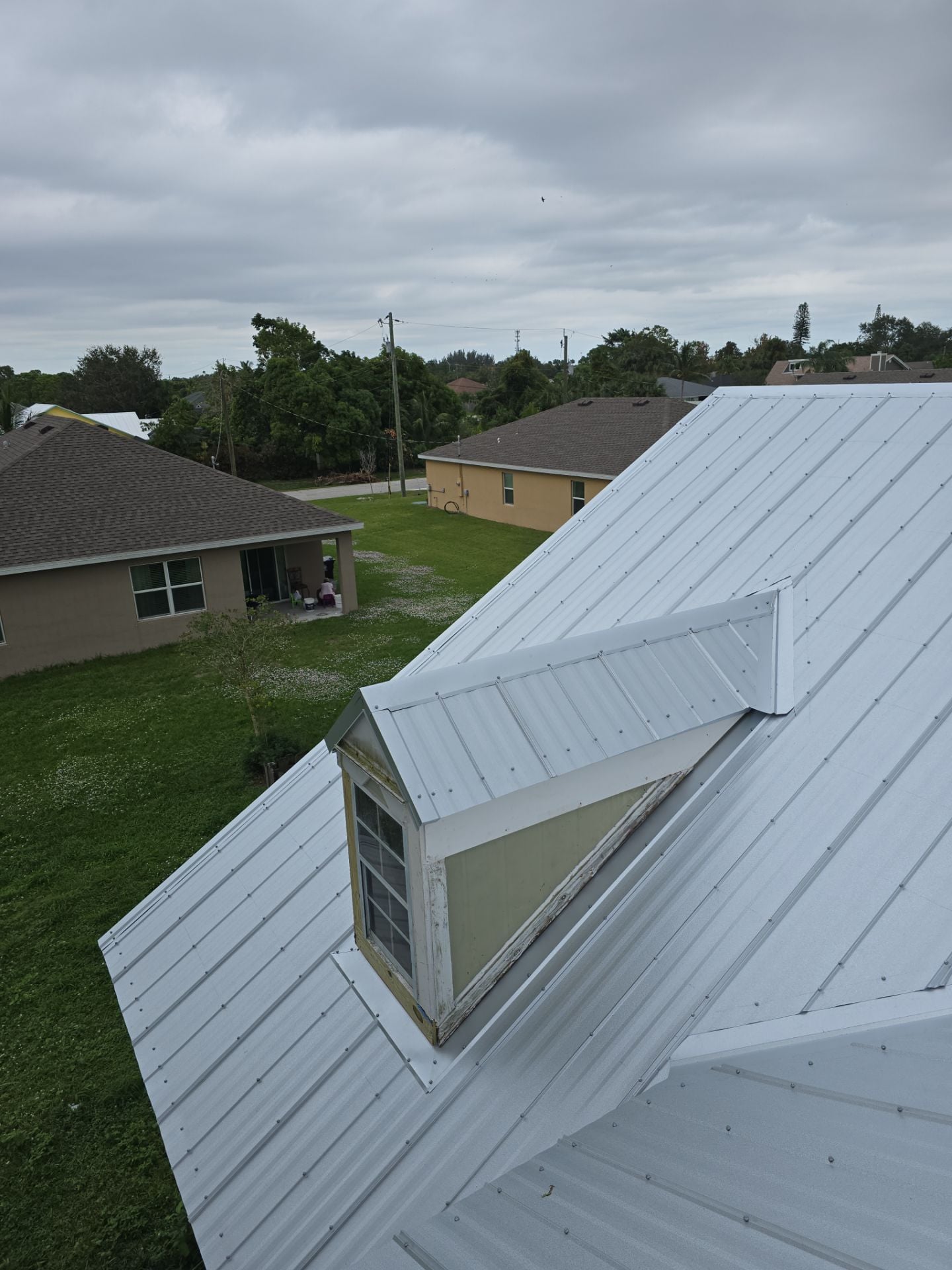
Corrugated panels have a wavy, ridged profile and are installed with exposed fasteners driven directly through the panel into the roof deck or purlins.
Strengths:
- Lower upfront cost, making it accessible for larger structures or budget-conscious projects
- Simple, widely available installation, since it’s a longstanding, familiar system for most roofing crews
- Strong for utilitarian structures, like barns, workshops, sheds, and agricultural buildings, where appearance and top-tier wind rating are secondary to cost efficiency
Trade-offs:
- Exposed fasteners are the most common failure point, since the rubber washers and seals around each screw degrade over time and require periodic maintenance or replacement
- Lower wind uplift resistance compared to standing seam in most standard installations
- Shorter typical lifespan, often 20–30 years, largely due to fastener wear rather than panel failure itself
- More visible fastener pattern, which some homeowners find less refined for a primary residence
Side-by-Side Comparison
| Factor | Standing Seam | Corrugated |
| Fastener type | Concealed | Exposed |
| Typical wind rating | Higher (140+ mph common) | Moderate |
| Typical lifespan | 40–70 years | 20–30 years |
| Upfront cost | Higher | Lower |
| Maintenance | Minimal | Periodic fastener/seal checks |
| Common use | Primary residences, high-wind areas | Garages, agricultural buildings, budget projects |
| Appearance | Clean, modern, no visible fasteners | Traditional wavy profile, visible fasteners |
Which One Is Right for Your Home?
Standing seam is generally the better fit if:
- This is your primary residence
- You’re in a hurricane-prone or high-wind area
- You want the roof to last multiple decades with minimal upkeep
- Appearance and resale value are a consideration
- You’re replacing a roof you don’t want to think about again for 40+ years
Corrugated is a reasonable fit if:
- You’re roofing a garage, workshop, barn, or secondary structure
- Budget is the primary constraint
- You’re comfortable with periodic fastener maintenance over the roof’s life
- The building’s use doesn’t call for the highest wind performance available
Neither option is objectively “better” in every situation. The right choice depends on what the structure is, how long you want the roof to last without attention, and what you’re trying to protect.
A Note on Installation Quality
Panel type is only part of the equation. A standing seam roof installed poorly can underperform a well-installed corrugated roof, and vice versa. Proper fastening patterns, flashing at penetrations, and panel alignment matter as much as the material choice itself. This is where experienced installation, not just panel selection, determines how the roof actually performs when a storm arrives.
How Rhino Roofs Approaches Metal Roofing
Metal roofing is one of the services we install most often, and we won’t default you to the more expensive option just because it’s the stronger performer on paper. If corrugated genuinely fits your structure and budget better, we’ll say so. If standing seam is the right call for your home’s long-term protection, we’ll explain exactly why, in plain terms, before you commit to anything.
Explore Metal Roofing Services
Frequently Asked Questions
What is the main difference between standing seam and corrugated metal roofing?
Standing seam panels connect with raised, interlocking seams and concealed fasteners, while corrugated panels have a wavy profile installed with exposed fasteners. This difference affects wind resistance, lifespan, cost, and appearance.
Which metal roof lasts longer, standing seam or corrugated?
Standing seam typically lasts 40 to 70 years, while corrugated metal roofing typically lasts 20 to 30 years, largely because exposed fasteners and seals wear out well before the metal panels themselves fail.
Is standing seam metal roofing worth the extra cost?
For a primary residence, especially in a hurricane-prone area, standing seam’s higher wind resistance, longer lifespan, and lower long-term maintenance generally justify the higher upfront cost.
Is corrugated metal roofing good enough for a house?
It can be, particularly for secondary structures or budget-driven projects. For a primary residence in a high-wind region, standing seam is generally the stronger long-term choice.
Do standing seam and corrugated metal roofs need different maintenance?
Yes. Standing seam requires minimal maintenance due to concealed fasteners, while corrugated roofing benefits from periodic checks of exposed fasteners and rubber seals, which degrade faster than the metal panels themselves.