
Commercial Tile Roof Replacement & Installation in Fort Pierce & The Treasure Coast

Commercial tile roofing is as structurally demanding as it is architecturally defining. The weight loads, underlayment specifications, wind uplift engineering, and phased logistics required to replace tile across a multi-family community or resort property require a level of planning and precision that separates experienced commercial tile installers from contractors who occasionally do tile work.

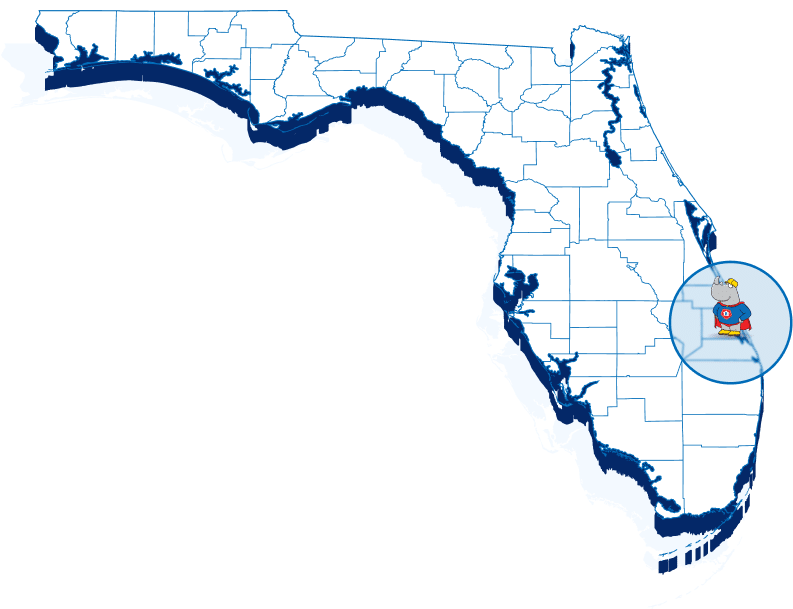
Rhino Roofs provides commercial tile roof replacement and installation across Fort Pierce, Port St. Lucie, Stuart, Vero Beach, West Palm Beach, and the surrounding Treasure Coast — working with HOA boards, property managers, resort operators, and building owners on capital replacements, storm damage restoration, and new architectural tile installations.

Architectural Commercial Tile Installation for Multi-Family & Corporate Assets

Concrete Tile for HOA & Condominium Communities

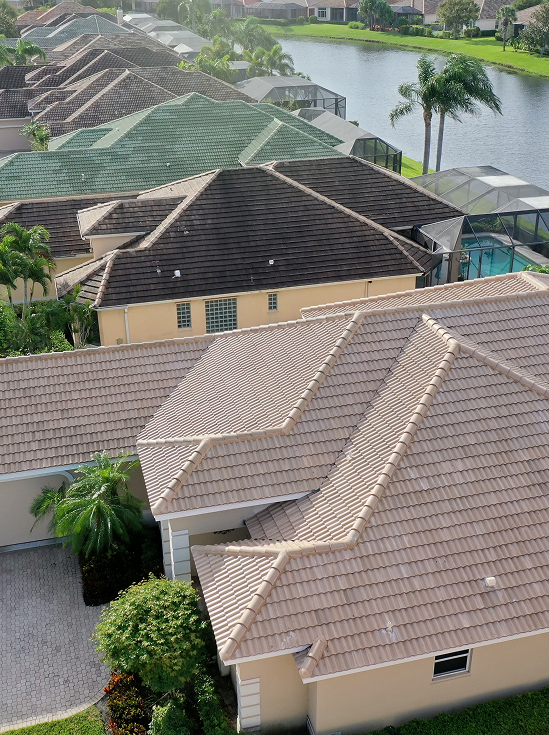
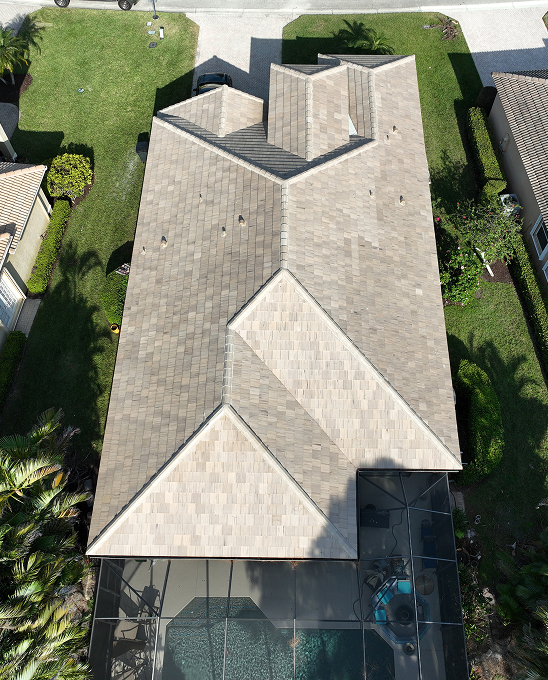
Architectural concrete tile is the most widely installed commercial tile profile across the Treasure Coast’s multi-family communities. It delivers the visual weight and Mediterranean character that defines coastal Florida architecture, with a cost profile that makes it viable at the scale of large HOA replacements.

Concrete tile is heavy — typically 8 to 11 lbs per square foot — which makes structural load verification a required pre-installation step on every project, not a suggestion. We assess truss configuration and deck load capacity across all affected buildings before material is ordered. If framing reinforcement is required, that’s part of the scope discussion, not a surprise after installation begins.

Vitreous clay tile carries the highest material cost and the longest performance horizon of any commercial tile option — and for luxury resort properties, high-end retail plazas, and coastal estate communities, it’s the appropriate specification. Clay’s fired color is permanent. It doesn’t fade, chalk, or require periodic recoating. Salt air and UV exposure that degrade painted finishes have no comparable effect on natural terra-cotta clay.

At 9 to 12 lbs per square foot, clay is the heaviest of the standard tile profiles. Structural assessment and, where required, engineered framing reinforcement are prerequisites. For historic commercial properties or architecturally significant buildings where authentic clay is part of the design intent, we source profiles that match existing tile in dimensions and character.

When a building’s framing cannot support the dead load of concrete or clay tile — either because it was originally designed for a lighter roofing system or because an engineering assessment reveals insufficient capacity — synthetic tile profiles provide the architectural appearance of tile at 2 to 4 lbs per square foot. They’re installed over specialized self-adhering membranes with mechanical fasteners and carry Florida Product Approval for HVHZ wind zone compliance.

Synthetic tile is not the default recommendation — it’s the right answer when structural constraints make it the honest one.

Tile Profile Reference

Concrete Tile

Weight

8–11 lbs/sq. ft.

Fixing Method

Polyurethane foam adhesive

Best Application

HOA communities, condominiums, townhouse developments

Weight

9–12 lbs/sq. ft.

Fixing Method

Foam adhesive or stainless fasteners

Best Application

Luxury resorts, historic commercial, upscale retail

Weight

2–4 lbs/sq. ft.

Fixing Method

Mechanical fasteners over self-adhering membrane

Best Application

Load-limited structures requiring tile aesthetics

The Hidden System — Underlayment & Secondary Water Barrier

Tile does not waterproof a commercial building. Tile sheds water, absorbs impact, and manages wind load — but the system that actually keeps water out is the underlayment beneath it. On commercial properties, this distinction has real operational consequences: a tile roof can look completely intact while the underlayment beneath it has degraded to the point where water is infiltrating multiple units or building sections.

Clay and concrete tiles routinely outlast the underlayment beneath them by decades. A high-performance self-adhering secondary water barrier installed over a properly prepared deck will perform for 25 to 30 years under Florida’s UV and thermal conditions. The tile above it may last 50 to 100. That gap is what drives most commercial tile roof replacements on the Treasure Coast — not tile failure, but underlayment failure.

Traditional felt underlayment is not an appropriate specification for commercial tile in Florida’s climate. It degrades under the elevated temperatures that build between the tile and the deck, does not provide the same secondary water resistance as a self-adhering membrane, and is increasingly non-compliant with current Florida Building Code requirements for HVHZ installations. We install premium high-temperature self-adhering underlayment systems on every commercial tile project — specified for the thermal and moisture conditions of coastal South Florida.

Foam Adhesive vs. Mechanical Fasteners

The method used to secure tile to the underlayment has direct consequences for wind uplift performance and underlayment integrity — two factors that matter significantly on the Treasure Coast.

Polyurethane foam adhesive

Is the preferred fixing method for most commercial tile installations in Florida's high-wind zones. Two-component foam creates a full-contact bond between the tile and the underlayment that distributes wind uplift load across the tile's full bearing surface rather than concentrating it at fastener points. It provides wind uplift resistance well above what mechanical fastening achieves, and it does so without driving thousands of fasteners through the waterproofing membrane — each of which is a potential leak point as sealant ages.

Mechanical fasteners

Stainless steel screws or ring-shank nails — remain appropriate for specific tile profiles and project conditions where foam adhesive is not the manufacturer's specified method, or where the exposure conditions and Florida Product Approval numbers for the installed tile require it. Where mechanical fastening is used, fastener type, placement, and pattern are specified to the wind uplift requirements of your building's ASCE 7-22 exposure category. We explain both options and the performance difference before installation begins.

Florida Building Code Compliance & Wind Engineering

ASCE 7-22 wind uplift calculations for commercial tile in St. Lucie County’s coastal exposure categories produce fastening and adhesive requirements that are more demanding than inland specifications. Field, perimeter, and corner zones are each calculated separately — because wind pressure concentrates at perimeters and corners in ways the field zone doesn’t experience.

Every commercial tile installation we complete is permitted through St. Lucie County or the appropriate local municipality, documented with Florida Product Approval codes for all installed materials, and inspected to current 8th Edition Florida Building Code standards. Notice of Commencement filing and inspector coordination are managed by our team.

For HOA communities, we also coordinate directly with board management on the approval documentation and project timeline communication that multi-family governing structures require before a capital roofing project can be authorized and scheduled.

Managing the Commercial Tile Replacement — Minimal Disruption to Residents & Tenants

Large-scale tile replacement on occupied multi-family or resort properties is a logistics project as much as a roofing project. Residents are home. Parking areas are in use. Common pathways are active. Getting that right requires planning that happens before the first crew arrives.

Step 1

Phased building scheduling. We sequence work across the property so that only a portion of the community is under active construction at any time — reducing the disruption footprint for residents and keeping the project manageable at the site coordination level.

Step 2

Debris management and pedestrian protection. Tiles removed during tear-off are channeled through structured debris management systems rather than dropped from rooftops. Ground-level pedestrian canopy zones and perimeter safety fencing are established at each active building before work begins.

Step 3

Material staging and weight distribution. Tile bundles are staged on roof slopes in calculated, balanced loads — preventing framing deflection and keeping material accessible to installation crews without concentrating dead weight in one location.

Step 4

Daily magnetic sweep. Every work day ends with a magnetic sweep of all driveways, walkways, and parking areas in the active work zone.

Commercial Tile Roofing Service Areas — Fort Pierce & The Treasure Coast

Fort Pierce, FL

Our home base; clay, concrete, and synthetic tile for all commercial property types

Port St. Lucie, FL

HOA and multi-family tile replacement with phased scheduling

Stuart, FL

Commercial tile installation and storm damage restoration

Vero Beach, FL

Luxury and resort commercial tile roofing

West Palm Beach, FL

Commercial tile replacement for Palm Beach County properties

Jensen Beach, FL

Coastal commercial tile with marine-condition specifications

Palm City, FL

HOA community tile replacement programs

Hobe Sound, FL

Commercial and resort tile roofing

Sebastian, FL

Full commercial tile roofing services

Hutchinson Island, FL

Oceanfront and coastal resort tile installation

Commercial tile roofing done right starts well before the first tile is set.

If you’re planning a capital replacement, recovering from storm damage, or evaluating what a tile installation requires for your property — Rhino Roofs is ready to give you a thorough assessment and honest guidance on every decision involved.

Frequently Asked Questions

How long does a commercial tile roof underlayment last on the Treasure Coast?

A premium self-adhering commercial tile underlayment typically performs for 25 to 30 years in Florida’s climate. The clay or concrete tiles above it can last 50 to 100 years — which means most commercial tile replacements on the Treasure Coast are driven by underlayment failure, not tile failure. Underlayment specification is one of the most important decisions in any commercial tile installation.

Foam adhesive creates a full-contact bond across the tile’s bearing surface, distributing wind uplift load more effectively than point fasteners and providing uplift resistance well above what mechanical fastening achieves. It also eliminates thousands of fastener penetrations through the waterproofing membrane — each a potential long-term leak source.

Phased building scheduling, ground-level pedestrian canopy zones, perimeter safety fencing at active buildings, structured debris management, and daily magnetic sweeps of all driveways and walkways. Property managers and board contacts receive daily schedule updates and a project communication plan before work begins.
Not always. We conduct a structural load assessment on every commercial tile project before material is ordered. If the existing framing wasn’t designed for tile’s dead load, reinforcement is required — and that scope is identified and priced before installation begins, not discovered mid-project.

TESTIMONIALS

Antonio Vargas
Antonio Vargas
I just had my roof replaced from Rhino roofing. My home is on Avenel lane in the PGA Village. I’m very satisfied on their promptness and quality of work. Ronnie, the project manager, was with me every step of the way. He made the experience worry free! Let’s face it.. it’s a huge investment.. and him picking up the phone and answering my questions Was wonderful.
Adjua Satchell
Adjua Satchell
had a wonderful experience with the company, no surprises. Carl, the sales rep is professional, on time and answered all my questions even after hours. I would definitely recommend Rhino Roofs. But most if all my roof looks beautiful.
Satie Rattan
Satie Rattan
My experience with Rhino Roofs was very good, my sales person was Phil who is very knowledgeable,and answered all my questions. I would recommend this company to anyone.
Robin
Robin
Ronnie was absolutely amazing from start to finish. Whenever I had a question he had the answer. Always answered text messages or calls within minutes of me contacting him. There were a few discrepancies with the project and he handled immediately. I definitely would recommend Rhino Roof for your project💕💣
Michey H
Michey H
Recently had the pleasure of working with Rhino, and I cannot recommend them enough! They were incredibly helpful, professional, and kind from the first call. Their team went above and beyond to answer all of my questions and make sure I understood the entire process, which made me feel confident and informed every step of the way. If you're looking for a roofing company that is reliable, hardworking, and genuinely nice to work with, look no further. I will definitely be recommending them to friends and family!