

Quick Answer
A well-installed metal roof commonly lasts 40 to 70 years in Florida, and often longer with the right materials and care. Coastal conditions can shorten that range if the wrong metal, coating, or fasteners are used, because salt air accelerates corrosion. Lifespan depends mostly on four things: the type of metal (aluminum, coated steel, or copper), the protective coating, the fasteners and trim, and the installation and maintenance. Metal roofs can rust, but rust is usually a sign of a mismatched material, a damaged coating, or a neglected detail, not an inevitable outcome. Standing seam systems with concealed fasteners generally outlast exposed-fastener corrugated systems, which commonly last around 20 to 30 years.
Here’s what actually determines how long a metal roof lasts near the water, and what to ask before you choose one.
Why Coastal Florida Is a Tougher Test for Metal
Metal roofing has a strong reputation for durability, and in most of Florida it earns it. It handles wind, shrugs off heavy rain, and doesn’t crack, rot, or burn. But along the Treasure Coast and Palm Beach County, especially on barrier islands and near the Intracoastal Waterway and the ocean, a few conditions put extra stress on the material:
- Salt in the air. Salt-laden air and spray settle on the roof and speed up corrosion on any bare or damaged metal.
- Constant humidity. Moisture lingers on the surface, particularly in shaded areas, around fasteners, and at seams.
- Intense UV. Sun exposure breaks down coatings and sealants over time.
- Heavy rain and hurricane-force wind. These stress fasteners, trim, and panel attachment.
None of this means metal is a poor choice at the coast. It means material selection and details matter more here than they do inland.
Typical Metal Roof Lifespans in Florida
| Metal roof type | Typical lifespan | Notes |
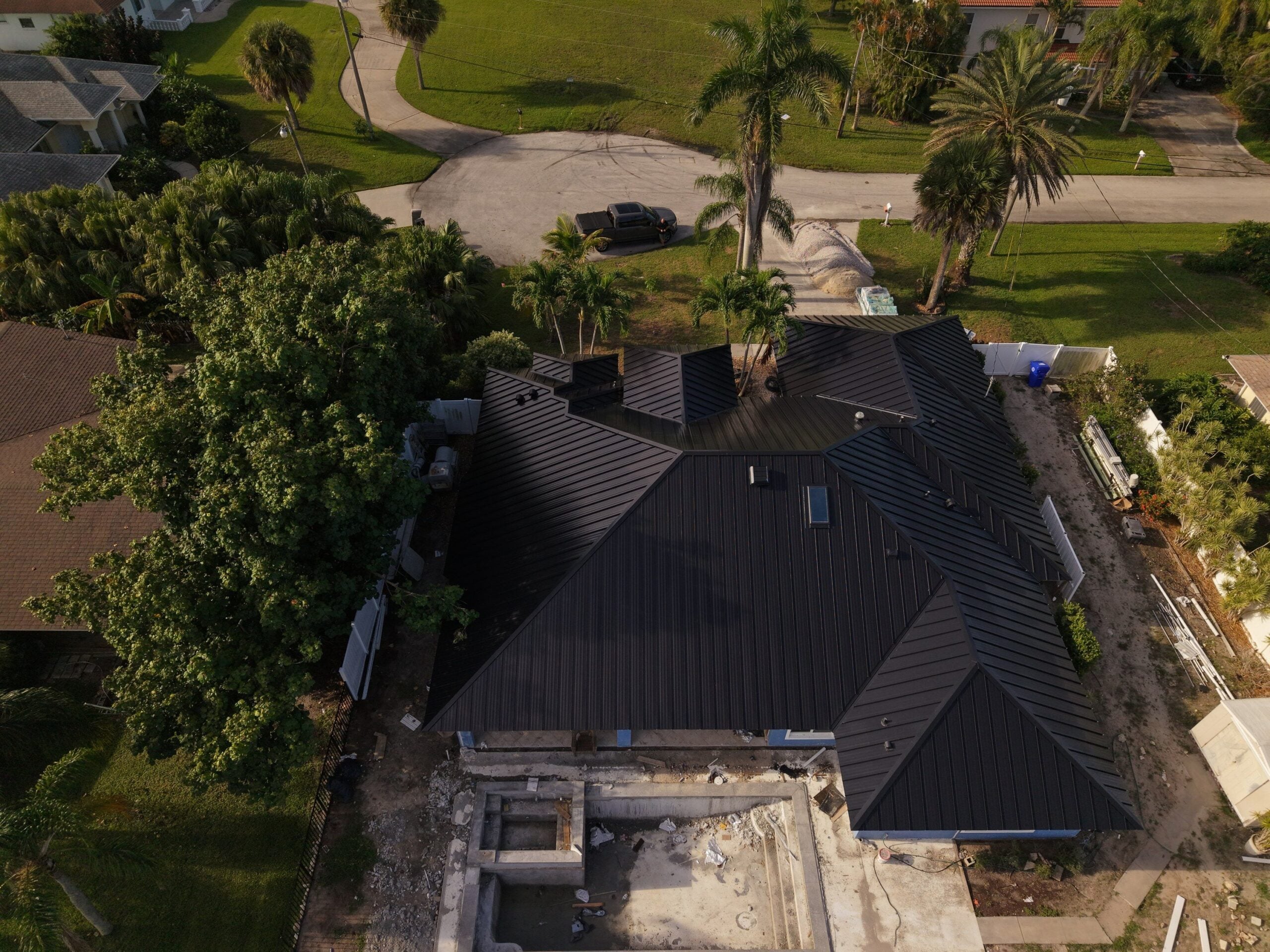
| Standing seam (coated steel or aluminum) | 40 to 70 years | Concealed fasteners reduce weak points |
| Corrugated or exposed-fastener panels | 20 to 30 years | Fasteners and washers often wear out first |
| Aluminum panels | 40 to 70 years | Does not rust; often favored near saltwater |
| Copper | 70 years or more | Develops a patina; higher cost |
| Metal shingles or tiles | 40 to 70 years | Varies by product and finish |
These are general ranges, not guarantees. A well-made roof with the wrong fasteners can fail early, and a modest roof with excellent installation and upkeep can outperform expectations. For a closer look at how panel styles compare, see our guide to standing seam vs. corrugated metal roofing.
Do Metal Roofs Rust?
Yes, some can, but it’s usually preventable. Whether a metal roof rusts depends on the metal and how well it’s protected:
- Aluminum does not rust. It can develop surface oxidation, but not the red rust associated with steel, which is why it’s often chosen close to saltwater.
- Steel can rust if its protective coating is scratched, worn through, or missing, especially at cut edges, fastener holes, and scratches. Galvanized or Galvalume-coated steel resists corrosion, but the protection isn’t permanent if the coating is compromised.
- Copper doesn’t rust, but it changes color as it weathers.
In other words, the question isn’t whether metal can rust. It’s whether the roof was built with the right material, coating, and details for its environment.
The Four Things That Decide How Long a Metal Roof Lasts
1. The Type of Metal
Each metal handles a coastal environment differently:
- Aluminum is often preferred for homes very close to saltwater because it doesn’t rust. It’s softer than steel, so it can dent more easily, but it resists salt well.
- Coated steel (galvanized or Galvalume) is strong and widely used. Its corrosion resistance depends on the quality and thickness of the coating, and on keeping that coating intact.
- Copper is extremely durable and attractive, but significantly more expensive.
2. The Coating and Paint System
The finish does more than determine color. It’s a major part of the roof’s protection:
- High-quality factory-applied finishes, such as PVDF-based paint systems (often sold under brand names like Kynar), are engineered to resist fading, chalking, and UV breakdown for many years.
- Thinner or lower-grade paint systems may fade and fail sooner, exposing the metal beneath.
- Scratches and cut edges are potential entry points for corrosion, so careful handling and touch-up during installation matter.
Ask what coating system a roof uses and what its manufacturer’s finish warranty says, including any limits related to coastal exposure.
3. Fasteners and Trim
This is the detail homeowners overlook most, and it’s often where coastal metal roofs fail first:
- Fastener material matters. Screws and clips that aren’t corrosion-resistant can rust or break down in salt air, even when the panels themselves are fine. Stainless steel or appropriately coated fasteners are commonly specified in coastal settings.
- Mixing dissimilar metals can cause galvanic corrosion. When two different metals touch in the presence of moisture, one can corrode faster. Matching fasteners, trim, and flashing to the panel metal helps prevent this.
- Exposed fasteners and their washers age out. On corrugated or screw-down systems, the rubber washers and seals degrade in sun and heat and need periodic checking or replacement. Concealed-fastener standing seam systems avoid much of this issue.
- Trim, flashing, and sealants are weak points if they’re lower grade or installed poorly.
4. Installation and Maintenance
Even the best materials depend on the work behind them:
- Proper underlayment and deck preparation protect the roof from below.
- Correct panel attachment and flashing details are what keep water out and wind from lifting the system.
- Regular inspections catch scratches, loose fasteners, and sealant wear before they become leaks.
- Occasional rinsing in salt-heavy environments can help remove salt buildup. Check your manufacturer’s care guidance for the right method.
Coastal Florida Metal Roof Warranties: Read the Fine Print
Metal roofing warranties often come in two parts: a finish warranty covering the paint system and a material or panel warranty covering the metal. Many manufacturers place conditions or limits on coverage for properties within a certain distance of saltwater, and they may require specific materials, fasteners, or maintenance. These terms vary by manufacturer and product, so it’s worth asking before you buy:
- Does the warranty apply to my address, given how close I am to the water?
- What does it require in terms of metal type, fasteners, and care?
- What does it cover (finish only, material, labor), and for how long?
- Is there a separate workmanship warranty from the installer?
A workmanship warranty is the installer’s promise on the quality of the installation itself, and it’s a separate document from the manufacturer’s materials warranty.
Metal Roof Lifespan in Hurricane Conditions
Longevity and storm performance go together. A roof that lasts 50 years has to survive several hurricane seasons along the way. That depends on:
- Panel and clip attachment designed for Florida’s wind-uplift requirements
- A properly fastened roof deck, which also matters for insurance documentation
- Secure flashing and trim, since wind often starts lifting a roof at the edges
- Permitted, code-compliant installation
Our guide on whether metal roofs are worth it in hurricane zones goes deeper on storm performance, and metal vs. shingle roofs in Florida compares lifespan against asphalt shingles.
Signs a Metal Roof Needs Attention
Metal roofs need less upkeep than most, but they aren’t maintenance-free. Watch for:
- Rust spots or streaks, especially at fasteners, cut edges, or scratches
- Peeling, chalking, or heavily faded paint
- Loose, backed-out, or missing fasteners
- Cracked or dried-out sealant and washers on exposed-fastener systems
- Lifted seams or loose panels
- Dents or damage from branches or debris
- Water stains inside the home, especially after wind-driven rain
- Corrosion at flashing or trim, particularly where different metals meet
Catching these early is usually a small repair. Left alone, a failing fastener or scratch can let moisture reach the deck.
How to Get the Longest Life From a Coastal Metal Roof
- Choose the metal for the environment. Ask whether aluminum or a higher-grade coated steel makes sense for your distance from the water.
- Specify the coating. Ask what paint system is used and how it performs in salt exposure.
- Insist on the right fasteners and trim, matched to the panel metal and rated for coastal use.
- Prefer concealed-fastener systems where the budget allows, to reduce long-term wear items.
- Keep installation documentation, including the permit, product approvals, and warranty paperwork.
- Inspect periodically and after major storms, and repair scratches, fasteners, and sealants promptly.
- Rinse off salt buildup as your manufacturer recommends, particularly if you’re close to the water.
Residential vs. Commercial Metal Roofs
The same principles apply to commercial buildings, with a few differences. Commercial metal roofs often use larger panels, different attachment systems, and low-slope or standing seam profiles, and they’re typically maintained as part of a building’s long-term capital plan. Lifespan still comes down to the metal, the finish, the fasteners, drainage details, and routine inspection, and a maintenance schedule matters even more when the roof protects inventory, equipment, or operations.
How Rhino Roofs Approaches Metal Roofing
We won’t sell you the most expensive metal roof by default, and we won’t promise a number of years we can’t stand behind. For a home or business near the coast, we’ll talk through the metal, the finish, the fasteners, and the details that actually decide how long the roof lasts, and we’ll explain our workmanship warranty in plain terms alongside the manufacturer’s coverage. You’ll know what you’re getting and why before you decide.
Explore Metal Roofing Services · Commercial Metal Roofs
Frequently Asked Questions
How long does a metal roof last in Florida?
A well-installed metal roof commonly lasts 40 to 70 years in Florida. Standing seam systems with concealed fasteners tend to last longest, while exposed-fastener corrugated systems commonly last around 20 to 30 years, mostly because fasteners and washers wear out first.
Do metal roofs rust in coastal Florida?
Some can. Steel roofs may rust if their protective coating is scratched or worn, particularly at cut edges and fasteners. Aluminum doesn’t rust, which is why it’s often chosen close to saltwater. Choosing the right metal, coating, and fasteners largely prevents the problem.
What is the best metal for a roof near the ocean?
Aluminum is often preferred very close to saltwater because it doesn’t rust, and high-quality coated steel with a durable paint system is also widely used. The best choice depends on your distance from the water, your budget, and the manufacturer’s warranty terms for coastal locations.
Does salt air shorten the life of a metal roof?
It can, if the roof uses materials or fasteners that aren’t suited to salt exposure. With the right metal, a quality coating, corrosion-resistant fasteners, and routine upkeep, a metal roof can still deliver decades of service near the coast.
Why do fasteners matter so much on a metal roof?
Fasteners are small, exposed to the elements, and often the first component to fail. In coastal environments, fasteners that aren’t corrosion-resistant can rust or loosen, and mixing dissimilar metals can cause galvanic corrosion. Concealed-fastener standing seam systems avoid many of these issues.
Do metal roofs need maintenance?
Less than most roofing types, but not none. Periodic inspections, prompt repair of scratches and loose fasteners, keeping drainage clear, and rinsing off salt buildup in coastal areas all help extend the roof’s life.
Does a metal roof warranty cover coastal homes?
It depends on the manufacturer and product. Many warranties have conditions or limits for properties close to saltwater, so it’s important to ask how the warranty applies to your address and what it requires in terms of materials and maintenance.
Is a metal roof worth it in coastal Florida?
For many homeowners it is, because of its longevity and wind performance, as long as the metal, coating, and fasteners are matched to the coastal environment and the roof is properly installed. A candid inspection and estimate should lay out both the benefits and the tradeoffs for your specific property.