

Getting a new roof is a significant investment. Most homeowners spend weeks researching contractors, comparing quotes, and preparing for installation day. What most people don’t prepare for is stepping outside after the crew leaves and finding their driveway cracked, their landscaping flattened, or their gutters bent out of shape.
It happens. And in the roofing industry, how a company handles it — or doesn’t — says more about who they are than almost anything else.
This post is about what a professional roofing crew actually protects during an installation, what kinds of damage are genuinely avoidable, and what your options are if something goes wrong on your property. No pressure, no scare tactics. Just a clear picture of what the standard should look like — and how to hold any contractor to it.
Why Property Damage Happens During Roofing Jobs
A full roof replacement is physically demanding work. Crews are moving heavy bundles of shingles, operating nail guns, tossing old material off the roof, and navigating around everything at ground level — your driveway, your plants, your gutters, your AC unit, your fence.
The job creates real hazards for the property below it. Old shingles and debris fall in unpredictable directions. Delivery trucks and material staging can stress driveways and turf. Ladders rest against gutters. Workers move around areas of the yard that homeowners have never thought to protect.
None of this is avoidable entirely. But all of it is manageable — when a crew is paying attention, has a plan, and actually cares about the property they’re working on.
The difference between a crew that damages your driveway and shrugs and one that anticipates the risk and takes precautions isn’t luck. It’s professionalism.
What a Professional Roofing Crew Protects
Before a nail is driven, a crew that’s doing things right has already thought through the property below the roofline. Here’s what that looks like in practice.
The driveway and hardscape
Heavy bundles of roofing shingles typically weigh 60–80 pounds each, and a full roof replacement requires dozens of them. When those bundles are delivered and staged — or when a loaded dumpster or equipment truck sits on your driveway for hours — the weight and pressure can crack pavers, damage concrete, or leave permanent impressions in asphalt, particularly in Florida’s heat.
A professional crew stages materials on plywood sheets to distribute weight, positions heavy equipment thoughtfully, and asks before assuming any surface is fair game. They also watch where ladders are placed, since metal feet dragged across pavers or slate can leave marks that don’t buff out.
Landscaping and plant beds
Torn-out roofing material doesn’t land softly. Old shingles, underlayment, nails, and debris all come off the roof in volume — and if there’s no protection below, they land directly in your plant beds, on your shrubs, and across your lawn.
A careful crew uses tarps laid around the perimeter of the home before tear-off begins. Plants directly adjacent to the roofline may be temporarily covered or moved. The goal isn’t perfection — some disruption during a major renovation is unavoidable — but a homeowner should feel like their property was respected throughout the entire project.
Gutters and fascia
Ladders are a source of gutter damage that homeowners almost never anticipate. A heavy aluminum extension ladder placed directly on a gutter run will dent, bend, or pull the gutter away from the fascia — especially on older systems. Good crews use ladder standoffs or stabilizers that span the gutter and rest against the fascia, keeping weight off the gutter itself.
Fascia boards also get incidental contact during installation. A crew paying attention notices when contact is damaging something and adjusts. A crew that isn’t paying attention doesn’t.
HVAC equipment and mechanical penetrations
Most Florida homes have rooftop penetrations — HVAC lines, vent pipes, exhaust fans — and many have ground-level equipment close to the home’s perimeter. Debris and falling material can damage condenser units, refrigerant lines, and exterior fixtures if a crew isn’t deliberate about where they’re working and what’s below them.
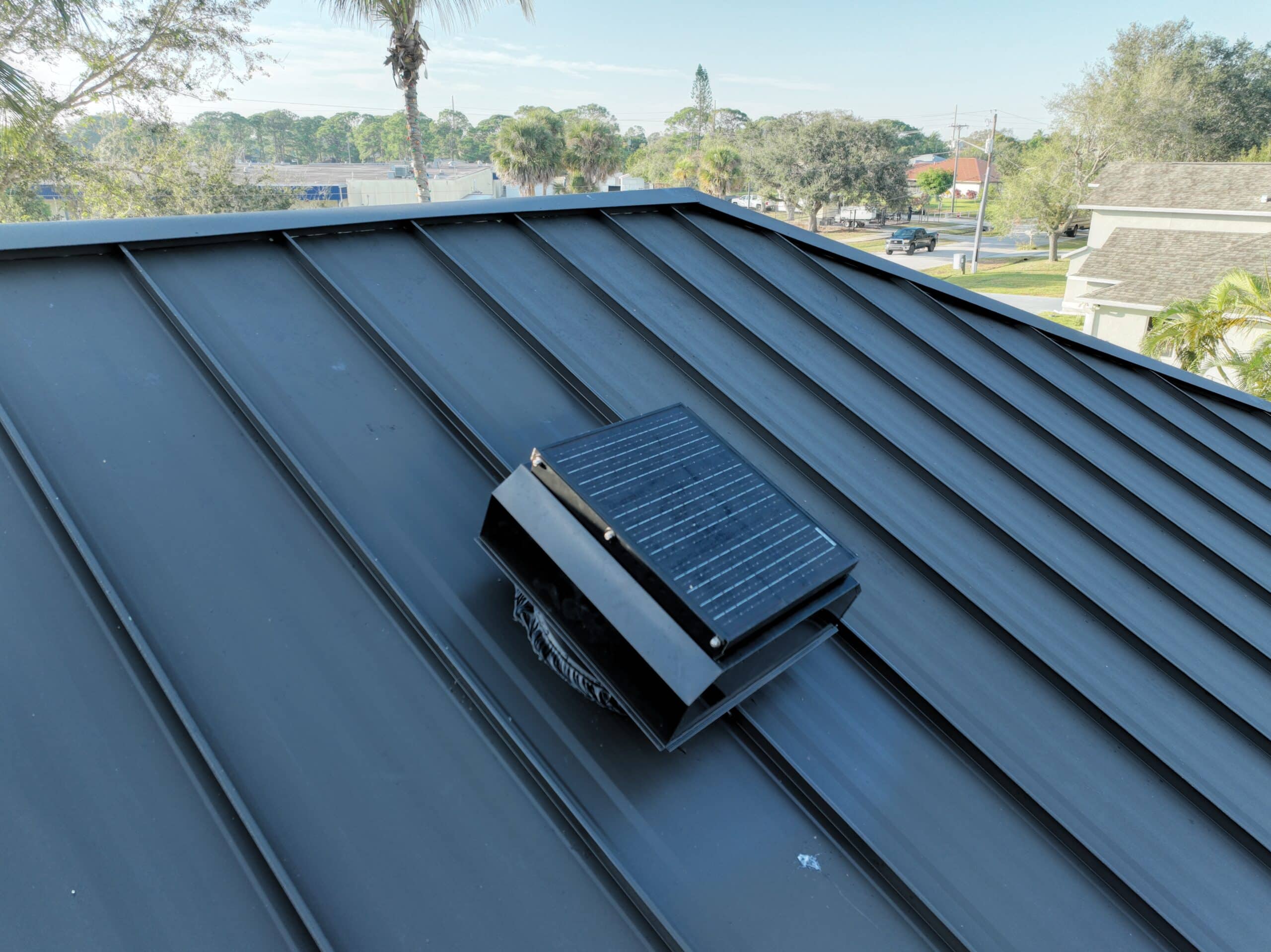
Any equipment at ground level that’s within the fall zone of roofing debris should be covered or relocated before work begins. Solar systems, satellite equipment, and specialty rooftop components should always be discussed before work begins, since some manufacturers require coordination with authorized providers.
Interior protection
This one surprises homeowners. A roof replacement creates significant vibration through the structure of the home — enough to knock artwork off walls, rattle shelving, and dislodge items that were sitting stably before a crew was working overhead.
A professional contractor lets you know this before installation day. That gives you time to remove fragile items from walls and shelves, cover furniture in rooms below the work area, and take down anything that vibration might affect. It’s a small thing to communicate. It’s a frustrating thing to find out the hard way.
What Damage Is Genuinely Unavoidable
Honesty matters here. Not every mark or disruption after a roofing job is a contractor’s fault, and it’s worth understanding what falls within normal wear and tear versus what should never have happened.
Lawn impressions and minor turf stress from material staging or foot traffic are largely unavoidable on a full replacement. Grass recovers. If temporary materials were placed with care and removed promptly, some impression left behind is normal.
Gutter cleaning is typically needed after any roof replacement. Old granules, shingle debris, and dust settle into gutters during installation — that’s the nature of the work. Most professional contractors include a debris blowout as part of their process, but some accumulation in the gutters after the job is normal and doesn’t constitute damage.
Minor surface dust and debris across the property — on vehicles, on patio furniture, on window sills — is largely unavoidable during a tear-off. A walkthrough cleanup afterward should address this, but homeowners should expect some dust on the day of the job.
Major property damage usually points to poor planning, poor protection, or poor supervision — not simply “part of roofing.”
What to Do If Something Is Damaged
This is where the character of a roofing company becomes most visible. Not when the job goes perfectly — when something goes wrong.
Document it immediately. Before anything is cleaned up or moved, photograph the damage from multiple angles. Note the date and time. If the damage is to something structural — a driveway, a gutter run, a fence section — get measurements and photos that clearly show the extent.
Notify the contractor the same day, in writing. A text or email creates a timestamped record of when you reported the issue and what you described. Don’t wait. A contractor who hears about damage two weeks later has more room to dispute it. A contractor notified the same day has less.
Request a written response. A professional company will acknowledge the damage, assess it, and offer a resolution. That resolution might be repair, replacement, or a credit — but it should be offered, not extracted through argument.
Get an independent estimate if needed. If the contractor disputes the damage or the cost to repair it, an independent contractor’s estimate for the repair gives you a documented basis for any further conversation, insurance claim, or complaint.
Know your rights. A reputable roofing contractor should never hesitate to provide proof of general liability insurance before work begins. If a contractor damages your property and refuses to address it, filing a claim against their bond or submitting a complaint to the Florida Department of Business and Professional Regulation (DBPR) are legitimate next steps.
The right contractor doesn’t put you in a position where you need to know any of this. But knowing it means you’re never without options.
What to Ask Before You Sign Anything
The time to understand how a contractor handles property damage is before they’re on your roof — not after. These questions take thirty seconds to ask and tell you a lot about who you’re dealing with.
Do you carry general liability insurance, and what’s the coverage limit? A legitimate Florida roofing contractor carries general liability as a condition of licensure. They should be able to provide a certificate of insurance on request without hesitation.
How do you protect landscaping and hardscape during tear-off? A crew with a real process will describe it specifically — tarps, plywood staging, ladder standoffs. A crew without a real process will give you a vague answer.
What’s your cleanup process at the end of the job? End-of-day cleanup and a final walkthrough of the property should be standard. Ask whether that includes a debris blowout of the gutters.
What happens if something is damaged during the job? The answer to this question is the most important one. A contractor who answers it directly and confidently — “we document it, we assess it, we make it right” — is showing you how they operate. A contractor who deflects, minimizes, or makes you feel like you’re asking something inappropriate is also showing you how they operate.
The Rhino Standard on Property Care
We think about the whole property — not just the roof above it.
Before our crew starts any job, we walk the perimeter with the homeowner, identify anything that needs to be covered, moved, or protected, and make sure everyone is on the same page about staging and access. Tarps go down before tear-off begins. Heavy materials are staged with plywood on hard surfaces. We use ladder standoffs to keep weight off gutter runs. Before we leave, we walk the property with the homeowner to make sure the site is clean, the work is complete, and any concerns are addressed.
If something happens on one of our jobs that damages your property, we address it directly. We don’t disappear when there’s a problem. We document it, communicate clearly, and work toward a resolution quickly. That’s not how we operate, and it’s not what we’d accept if it were our own home.
You can read about our work and our process on our projects page or get a sense of how our customers experience us on our reviews and testimonials page. And if you have questions about what a Rhino installation actually looks like from start to finish, our FAQ page covers the most common ones.
Frequently Asked Questions
Is a roofing contractor responsible for damage to my driveway? Yes — if the damage is caused by their equipment, material staging, or crew activity, it falls within the scope of their general liability coverage. Document the damage immediately, notify the contractor in writing the same day, and request a written response. A licensed Florida roofing contractor is required to carry general liability insurance for exactly this reason.
What should I move or protect before a roofing crew arrives? Your contractor should walk you through this before installation day, but as a general rule: remove vehicles from the driveway, cover or move any patio furniture close to the home, take down fragile wall art and items on shelves inside rooms below the work area, and make note of any landscaping features adjacent to the roofline that may need temporary protection.
Can roofing work damage my gutters? It can, and it’s one of the more common sources of post-installation damage when crews use ladders without standoffs. A professional crew uses ladder standoffs or stabilizers that bridge the gutter and rest against the fascia, preventing direct ladder contact with the gutter channel. Ask your contractor about this before the job starts.
What’s a normal amount of cleanup to expect after a roofing job? A professional crew should remove all roofing debris from the property, do a magnetic sweep of the yard and driveway for nails, perform a debris blowout of the gutters, and walk the property with you before leaving. Some dust and minor debris are inevitable on the day of installation, but the property should be in clean, undamaged condition by the time the crew leaves.
What if my contractor refuses to address damage they caused? Document everything with photos and written communication. If the contractor is unresponsive or refuses to take responsibility, you have several options: file a claim against their general liability insurance, submit a complaint to the Florida Department of Business and Professional Regulation (DBPR), or consult an attorney if the damage is significant. Keep every written record of your communication with the contractor.
Does Rhino Roofs include a property walkthrough at the end of every job? Yes. A final walkthrough with the homeowner is a standard part of every Rhino installation. If anything on the property doesn’t look right, we want to know before we leave — not after. Our residential roofing process is built around accountability from start to finish, and the final walkthrough is part of how we hold ourselves to that.
A new roof is a big decision. The crew you choose should make the process feel handled — from the first nail to the final walkthrough. If you want to talk through what that looks like with Rhino, we’re easy to reach.
Schedule a Roof Inspection or call us at (772) 446-1139. We serve Treasure Coast and Palm Beach County, and we’re happy to answer any question you have before you decide.