

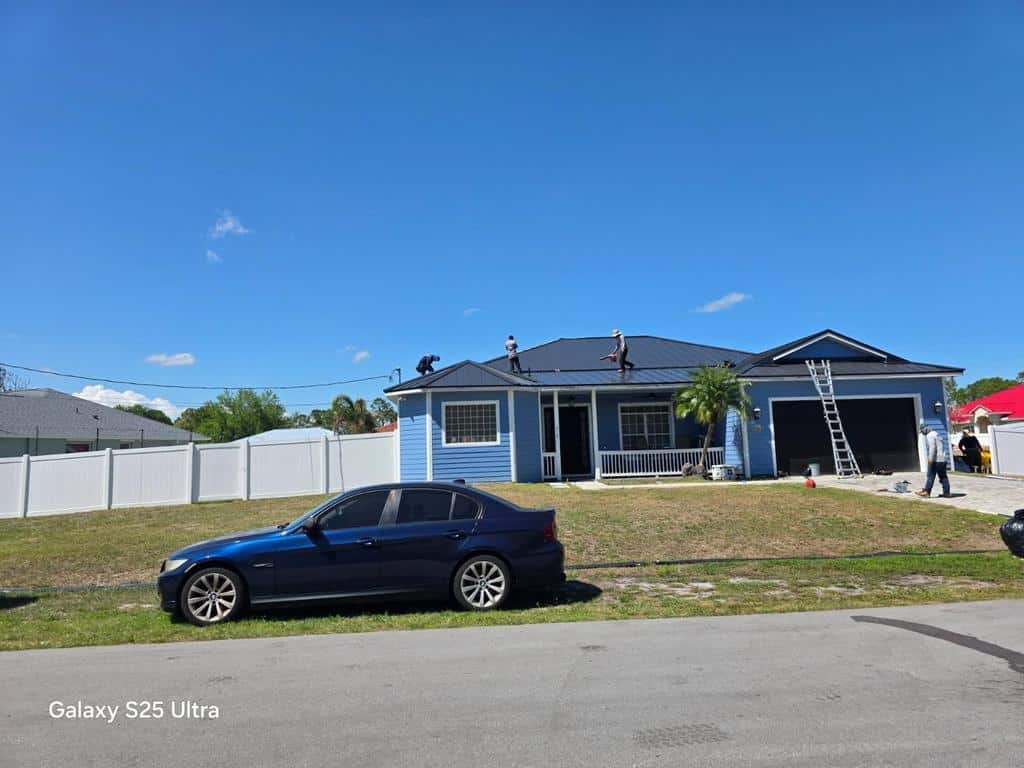
If you own a home in Florida, your roof and your homeowners insurance are more connected than most people realize. In 2026, that relationship has gotten more complicated — and in some ways, more favorable for homeowners who are paying attention.
New legislation, updated inspection standards, and a shifting insurance market mean the rules around Florida homeowners insurance roof requirements have changed in meaningful ways this year. Whether your roof is brand new or pushing fifteen years, understanding these changes can protect your coverage, prevent unnecessary costs, and give you real confidence in the decisions you make for your home.
This guide breaks it all down — clearly, without pressure, and in plain language.
Insurance eligibility, premiums, inspections, and underwriting decisions vary by carrier and policy. Homeowners should consult their insurer regarding specific coverage requirements.
Why Your Roof Drives Your Insurance in Florida
Florida experiences more named storms, more hurricane landfalls, and more wind-driven water damage than almost any other state. Roof failures account for a significant share of the insurance claims filed after major weather events, which is why Florida insurance carriers pay close attention to roof age, condition, and construction.
This isn’t just about protecting the insurer’s bottom line. A well-built, properly maintained roof is one of the most important things standing between your family and a major loss. When insurance companies evaluate risk, they’re evaluating your roof first.
Understanding this connection is the first step to navigating your coverage confidently.
The 15-Year Rule: What the Law Actually Says in 2026
Florida’s most important roof-age protection for homeowners comes from Senate Bill 2D, passed in May 2022, and codified in Florida Statute §627.7011. This law prohibits insurance companies from denying coverage based solely on roof age — as long as the roof is less than 15 years old. These protections apply to homeowners’ insurance policies issued or renewed on or after July 1, 2022, and continue to protect a large share of Florida homeowners in 2026.
Here’s what that means in practice:
- Under 15 years old: Insurers cannot drop or deny your policy based solely on roof age. You are legally protected.
- 15 years and older: Insurers can require an inspection before issuing or renewing your policy — but they still cannot deny coverage based solely on age if an authorized inspector certifies your roof has at least five more years of useful life remaining.
The key phrase here is “based solely on age.” Condition, documentation, and a professional inspection all matter. A 17-year-old roof in excellent condition may still be eligible for coverage when supported by proper inspection documentation. A 12-year-old roof with significant damage may still face scrutiny.
If you’re not sure where your roof stands, a professional inspection removes the guesswork — and gives you documentation that can be submitted to your insurance carrier as part of the underwriting or renewal process.
Proposed 2026 Legislation: What Homeowners Should Watch
Two bills were introduced in the 2026 Florida legislative session — Senate Bill 808 and House Bill 815 — that would have expanded existing roof age protections for residential property insurance policies. Both were drafted with a proposed effective date of July 1, 2026. However, as of the end of the legislative session, neither bill was enacted into law. HB 815 died in the Insurance & Banking Subcommittee, and SB 808 did not advance out of committee.
While the proposed legislation did not pass this session, the underlying principles — condition-based evaluation over automatic age-based denial, and inspection rights before replacement mandates — reflect the direction Florida’s regulatory environment has been moving in recent years.
Homeowners should stay informed as the legislative landscape continues to evolve. If your insurer is pushing for a roof replacement, speaking with a licensed roofing contractor before making any decisions is always the right first step.
Wind Mitigation Inspections: The Insurance Discount Most Homeowners Miss
One of the most underutilized tools available to Florida homeowners is the wind mitigation inspection. Florida Statute §627.0629 requires insurance companies to provide premium discounts for verified wind-loss mitigation features. Most homeowners don’t know this discount exists — or that their roof may already qualify for it.
A wind mitigation inspection evaluates seven specific features of your home’s construction:
- Roof covering: The material and installation method of your roof surface.
- Roof deck attachment: How the roof deck is fastened to the structure below it.
- Roof-to-wall connections: Whether hurricane straps or clips connect the roof framing to the walls.
- Roof shape: Hip roofs (sloped on all four sides) generally perform better and earn larger discounts than gable-end roofs.
- Secondary water resistance: A peel-and-stick membrane under the roof covering that prevents water intrusion even if shingles are lost in a storm.
- Opening protection: Impact-rated windows, doors, and garage doors — or properly documented storm shutters.
- Building code compliance: Homes built after the 2001 Florida Building Code updates generally earn better scores here.
When multiple features qualify, the discounts stack. Homes with comprehensive wind protection can see meaningful reductions on the windstorm portion of their premium — and in Florida, windstorm coverage can represent up to 70% of your total insurance bill.
The Updated OIR-B1-1802 Form: What Changed in April 2026
The wind mitigation inspection uses a standardized form — the OIR-B1-1802, officially called the Uniform Mitigation Verification Inspection Form. Effective April 1, 2026, the Florida Office of Insurance Regulation released a major update to this form, the first significant revision in over a decade.
The updated form requires stricter documentation, including more detailed permit history and photographic proof of construction features. It also incorporates new wind zone classifications based on updated wind speed data. If your current wind mitigation report is more than two years old, or if you’ve made any improvements to your roof, windows, or doors since your last inspection, requesting a new inspection under the updated form may produce better results — and better discounts.
One important note: always verify that your inspector is using the current OIR-B1-1802 form and is Florida-licensed. The OIR-B1-1802 form is the standard form used by Florida insurers for wind mitigation inspections.
Professional contractors should document roof condition thoroughly with photos, inspection findings, and permit records before making insurance-related recommendations.
How a New Roof Affects Your Florida Homeowners Insurance
If you’re considering a roof replacement, the insurance implications are worth thinking through carefully. A new roof resets the clock on the 15-year rule, eliminates the need for age-based inspections for years to come, and can unlock significant wind mitigation credits — particularly if your new roof includes upgraded features like a secondary water resistance membrane or enhanced deck attachment.
The material you choose matters too. Metal roofing, for example, often performs exceptionally well in wind mitigation inspections due to its fastening systems, interlocking panels, and long service life. A metal roof installed today can remain well within insurance compliance for decades — making it one of the most insurance-friendly choices available to Florida homeowners.
Whatever material you choose, make sure your roofing contractor is licensed, pulls the proper permits, and installs only Florida Product Approval (FPA)-certified materials. Unpermitted work can void your insurance and create serious problems when you sell. This isn’t about checking a box — it’s about protecting the investment you’re making in your home.
What Happens If Your Roof Fails an Inspection?
If an inspection reveals that your roof has less than five years of useful life remaining, insurers may have grounds to require repairs or replacement before renewing your policy. This situation is stressful — but it’s not without options.
A licensed roofing contractor can help you understand exactly what the inspection found, what repairs are feasible versus what warrants a full replacement, and what a replacement would realistically cost. In some cases, targeted repairs can extend your roof’s useful life enough to satisfy insurer requirements. In others, a full replacement is the more cost-effective path.
The worst position to be in is a last-minute scramble with a coverage gap looming. If you’ve received an inspection report with concerns, or if your insurer has indicated your policy may not renew, reach out to a qualified contractor before the deadline. You’ll have more time to make a thoughtful decision, more options to choose from, and a better outcome for your home.
Rhino Roofs specializes in storm damage assessment and insurance-related roofing work across Treasure Coast and Palm Beach County. Our team understands what insurers are looking for, and we document everything properly from start to finish.
The Florida Insurance Market in 2026: What’s Actually Happening
After years of premium increases and carrier exits, there is cautiously good news for Florida homeowners in 2026. Several insurers have filed rate reductions, and Citizens Property Insurance Corp. has moved toward premium cuts for personal lines — a meaningful reversal from recent trends.
This doesn’t mean the market is easy. Coastal and high-risk areas still face higher premiums and fewer carrier options than other parts of the state. But for homeowners with newer roofs, documented wind mitigation features, and good maintenance records, 2026 presents a genuine opportunity to shop for better coverage at more competitive rates.
The homeowners who benefit most are the ones who are prepared: roofs in good documented condition, inspection reports in hand, and a clear picture of their home’s risk profile.
What Florida Homeowners Should Do Right Now
You don’t need to wait for a problem to take action. Here’s a practical checklist:
- Know your roof’s age. Find the installation date and keep that documentation accessible. If you bought your home without clear records, a licensed contractor can often help estimate age based on materials and condition.
- Schedule a professional inspection if your roof is approaching 15 years. Getting ahead of the insurer’s request gives you more control over timing and outcome.
- Review your wind mitigation report. If it’s more than two years old, or if you’ve made improvements, a fresh inspection under the updated 2026 form could unlock additional discounts.
- Keep your records organized. Permits, installation contracts, inspection reports, and maintenance records all support your coverage and your negotiating position.
- Talk to a roofing contractor before making insurance-driven decisions. If your insurer is pushing for a replacement, get an independent professional assessment first.
Frequently Asked Questions
Can my Florida insurance company drop me because of my roof’s age? Not if your roof is under 15 years old. Florida law (§627.7011) prohibits insurers from denying or dropping coverage based solely on roof age for roofs less than 15 years old. Once your roof reaches 15 years, insurers can require an inspection — but they still cannot deny coverage if an authorized inspector certifies at least five more years of useful life remain.
What is a wind mitigation inspection and how can it lower my premium? A wind mitigation inspection is a Florida-standardized evaluation of your home’s hurricane-resistant features, including roof shape, deck attachment, roof-to-wall connections, and secondary water resistance. Florida law (§627.0629) requires insurers to provide premium discounts for verified features. The inspection uses the official OIR-B1-1802 form (updated April 2026), costs between $100 and $150, and typically takes under an hour. Homes with multiple qualifying features can see meaningful reductions on the windstorm portion of their premium.
Does a new roof lower my homeowners insurance in Florida? Generally, yes. A new roof resets the 15-year age protection, reduces the likelihood of an insurer-mandated inspection, and can qualify your home for improved wind mitigation credits — especially if upgraded features like a secondary water resistance membrane or stronger deck attachment are included. Metal roofing in particular often performs well on wind mitigation inspections. The actual impact on your premium will depend on your insurer, your specific home, and what the inspection documents.
What does “useful life remaining” mean, and who determines it? When insurers require an inspection for a roof over 15 years, they want to know how many years of serviceable life the roof has left. Under Florida law, if an authorized inspector certifies at least five years of useful life remaining, the insurer cannot deny coverage based solely on age. Authorized inspectors include licensed roofing contractors, general contractors, home inspectors, and engineers. This expanded list — established by HB 1611, effective July 2024 — makes it easier for homeowners to obtain the documentation they need.
What happened with the proposed 2026 roof insurance bills? Senate Bill 808 and House Bill 815 were both introduced in the 2026 legislative session with the goal of expanding roof age protections for residential property insurance. Neither bill was enacted — HB 815 died in committee, and SB 808 did not advance. Homeowners should consult their insurer for current coverage requirements and watch for future legislative developments.
How do I know if my roof qualifies for a wind mitigation discount? The only way to know for certain is a professional wind mitigation inspection using the current OIR-B1-1802 form. Features that commonly earn credits include hip roof shape, hurricane straps or clips connecting roof to walls, ring-shank nails in the roof deck, a secondary water resistance membrane, and impact-rated windows or doors. If your home was built after 2001 or has had roofing upgrades since then, there’s a good chance you have qualifying features — possibly ones you’ve never been credited for.
Where Tough Roofs Meet Happy Homes
At Rhino Roofs, we believe homeowners deserve honest information and real guidance — not pressure, not fear, not rushed decisions. The roofing process is unfamiliar territory for most people, and the insurance piece adds another layer of complexity.
Our team works with homeowners across the Treasure Coast and Palm Beach County to assess roof condition accurately, document everything properly, and help you make the decision that’s genuinely right for your home. Whether you’re navigating an insurer’s inspection request, considering a residential roof replacement, or simply want to understand where you stand, we’re here to walk you through it.
Ready to get a clear picture of your roof’s condition? Get an instant roof quote or give us a call at (772) 446-1139. No pressure. Just answers.