

Your commercial roof is not a maintenance item. It is one of the most significant capital decisions you will make as a business owner, and in Florida, the stakes are even higher than most places.
Between the heat, the humidity, the hurricane seasons, and the sheer number of contractors competing for commercial work, it is easy to feel overwhelmed before you have even gotten your first bid. This guide is designed to change that. Whether you own a retail strip, a warehouse, a medical office, or a multitenant building on the Treasure Coast, understanding how commercial roof replacement actually works will help you move forward with clarity instead of pressure.
Why Commercial Roofing in Florida Is Its Own Category
Florida is not a forgiving environment for buildings. The combination of UV radiation, standing water after heavy rains, and the threat of tropical-force winds creates conditions that most roofing systems were not designed to handle indefinitely. A flat or low-slope commercial roof that performs well in the Midwest may fail prematurely here without the right material selection and installation standards.
Florida also operates under some of the most demanding building codes in the country, largely shaped by the lessons of past hurricane seasons. The Florida Building Code requires commercial roofing work to meet specific wind uplift ratings, fastening requirements, and inspection standards that vary by county. On the Treasure Coast, this includes St. Lucie, Martin, and Indian River counties, each with their own permitting offices and inspection timelines. A contractor who does not understand these local requirements is not just an inconvenience. They are a liability.
The Most Common Commercial Roof Systems in Florida
Not every roofing system is appropriate for every building, and material selection matters more in Florida than almost anywhere else. Here is a practical breakdown of the systems most commonly used for commercial buildings in our region.
TPO Roofing (Thermoplastic Polyolefin)
TPO has become one of the dominant flat roofing materials in Florida commercial construction, and for good reason. It reflects heat effectively, which reduces cooling costs in a climate where HVAC is one of the largest operating expenses a business faces. TPO is also resistant to UV degradation and chemical exposure, holds up well in standing water, and is relatively cost-effective compared to other single-ply systems. For most standard commercial buildings in the Port St. Lucie area, TPO is worth serious consideration.
Modified Bitumen
Modified bitumen is a multi-layer system that has been used in Florida commercial roofing for decades. It performs well in high-heat environments and offers excellent waterproofing when installed correctly. It is often chosen for roofs with more foot traffic or equipment access, since it holds up better under mechanical wear than single-ply membranes. The installation process requires experienced crews to execute properly, particularly in the heat of a Florida summer.
Metal Roofing for Commercial Buildings
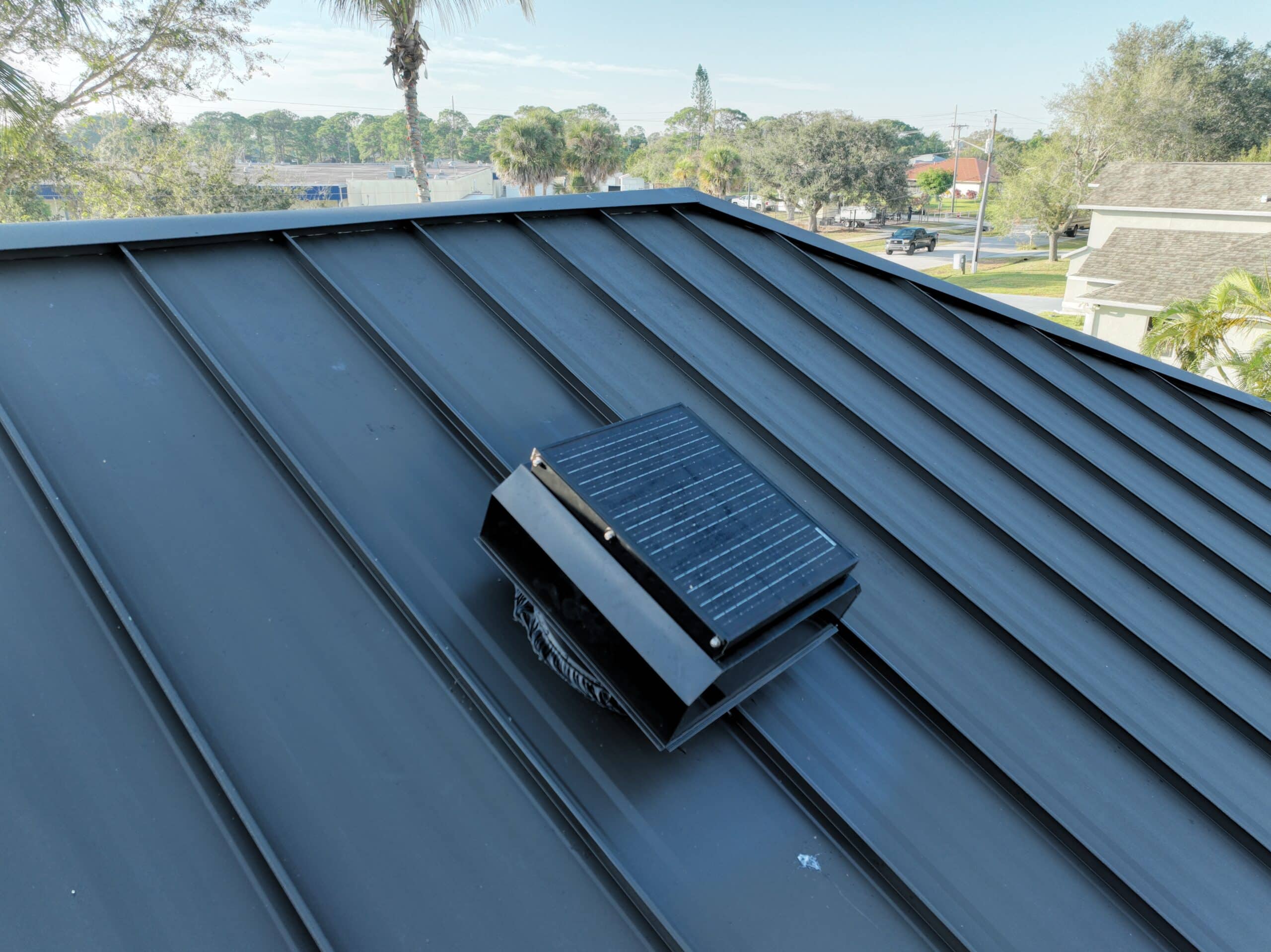
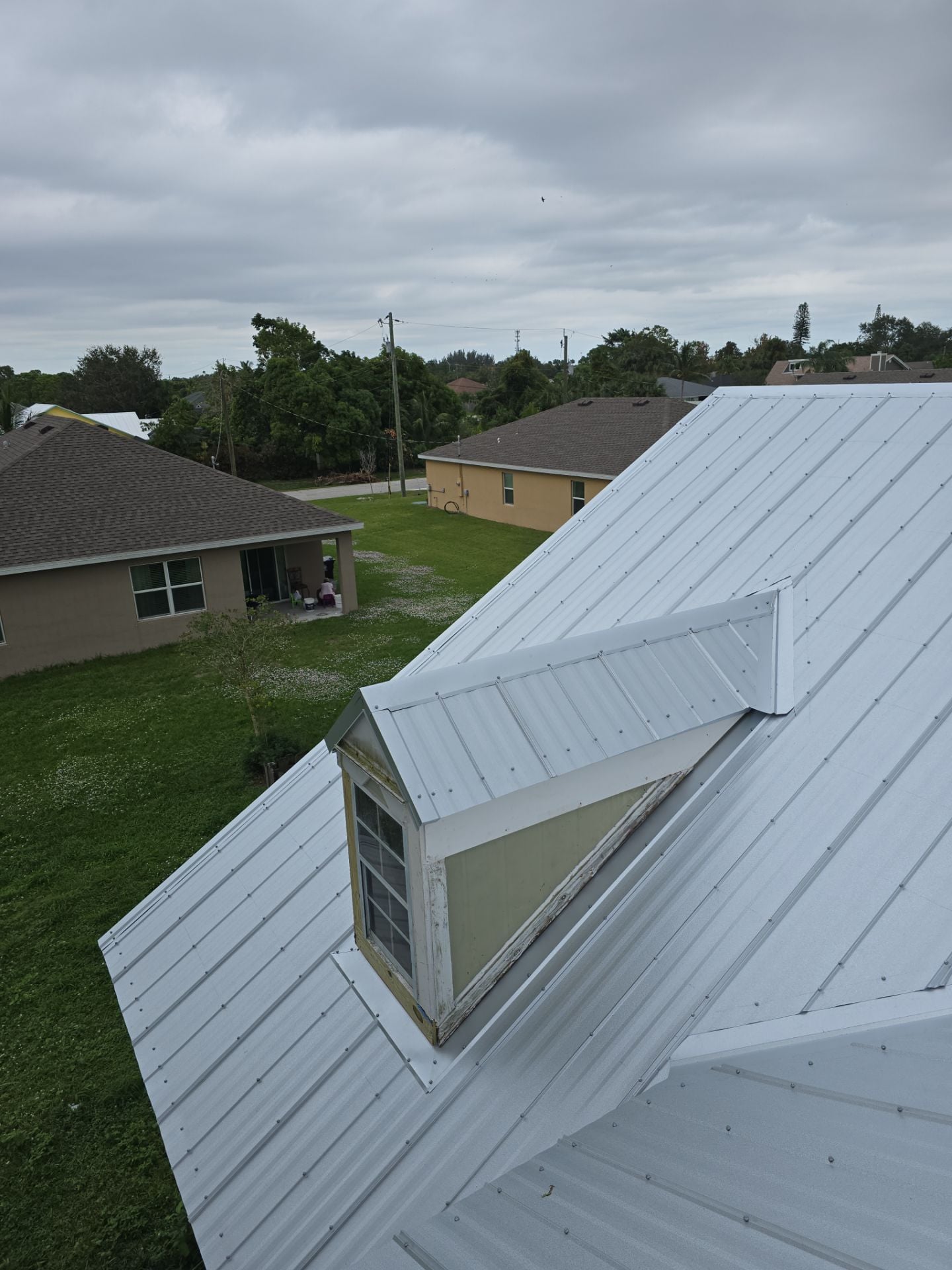
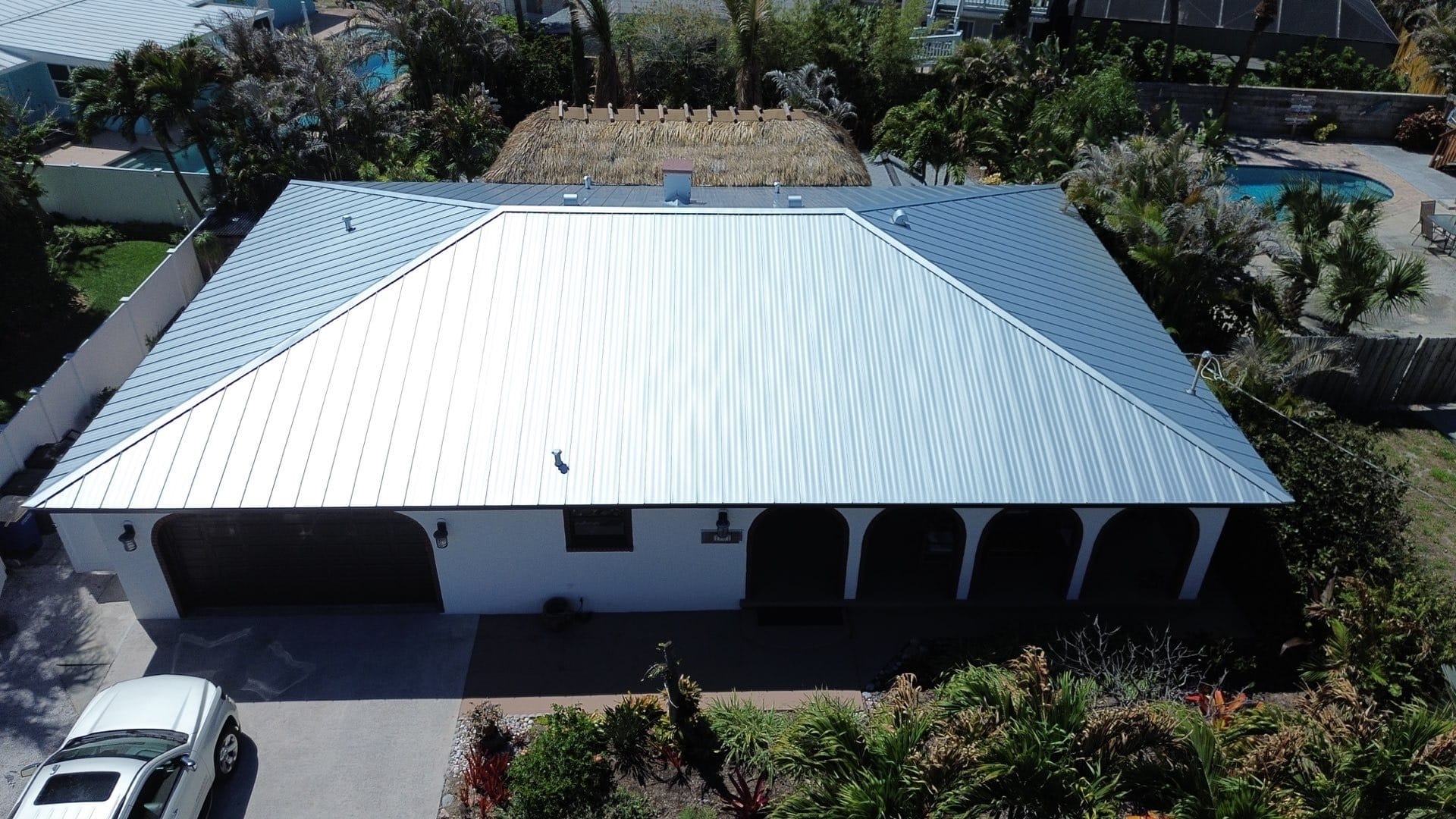
Standing seam metal is increasingly being selected for commercial applications, particularly for office buildings, retail spaces, and buildings where longevity is the top priority. Metal roofing carries one of the longest service lives of any commercial system, often 40 to 50 years with proper maintenance, and modern profiles can handle wind uplift ratings that meet or exceed Florida Building Code requirements. At Rhino Roofs, metal roofing is one of our specialties, and we bring that same expertise to commercial roofing projects across the Treasure Coast.
EPDM (Rubber Roofing)
EPDM is a single-ply rubber membrane that has been used in commercial roofing for generations. It is flexible, durable, and performs reliably in temperature extremes. In Florida’s climate, it is typically chosen for buildings with very large, unobstructed roof surfaces, since it comes in wide rolls that minimize seams, which is where most flat roof leaks originate. It is generally not the most energy-efficient option for Florida since it tends to absorb heat rather than reflect it, but it remains a dependable choice for the right application.
What Commercial Roof Replacement Actually Costs in Florida
Flat roof replacement cost in Florida varies widely depending on square footage, material choice, existing roof condition, and whether any structural or deck repairs are needed before the new system goes on. Giving you a single number without knowing those variables would not be useful, but here is what you can expect in terms of the factors that drive cost.
Material selection is the biggest lever. TPO typically lands in the middle of the cost range for single-ply systems. Modified bitumen and EPDM are similar. Metal roofing carries a higher upfront cost but often delivers the lowest cost per year of service life.
Tear-off matters more than most business owners expect. In Florida, building codes generally require that old roofing material be removed before a new system is installed on commercial buildings, particularly after a certain number of layers. The labor and disposal cost associated with tear-off adds to the total, but it is also what allows a new system to be installed correctly on a clean, inspected deck.
Deck repairs are sometimes discovered after tear-off begins. Moisture intrusion, wood rot, and structural deterioration are not always visible from the surface. A reputable commercial roofing contractor will assess the deck and communicate what they find before proceeding, so there are no surprises at invoice time.
If you are ready to get a real number for your building, request a commercial roofing estimate from our team. We will come out, assess the full scope, and give you a clear picture of what the project involves.
How to Evaluate a Commercial Roofing Contractor on the Treasure Coast
Choosing the wrong contractor for a commercial roofing project is a much bigger problem than it sounds. Commercial roofing systems are warrantied differently than residential systems, and those warranties often depend on the contractor being a certified installer for the manufacturer. If the contractor is not certified, the material warranty may be void from day one.
Here is what to verify before signing anything.
Licensure is not optional. In Florida, commercial roofing contractors must hold a valid state license. Ask for the license number and verify it through the Florida Department of Business and Professional Regulation. This takes two minutes and eliminates a significant category of risk.
Insurance matters as much as price. A commercial roofing project involves crews working at height on your property. If a contractor is not properly insured for workers’ compensation and general liability, any incident on your roof becomes your financial problem. Ask for certificates of insurance and verify they are current.
Manufacturer certifications distinguish experienced contractors from anyone who showed up with a crew. Certifications from manufacturers like Carlisle, Firestone, GAF, or Johns Manville indicate that a contractor has been trained and vetted to install those systems correctly. This is also usually a requirement to access the manufacturer’s workmanship warranty, which can cover labor costs if something fails.
Local experience is underrated. A contractor who has been working on commercial properties in Port St. Lucie, Stuart, and Vero Beach understands the permit process, the inspection requirements, and the specific challenges of roofing in Treasure Coast weather. That familiarity shortens the project timeline and reduces the chance of costly miscommunication with the county building department.
The Commercial Roof Replacement Process: What to Expect
One of the most common frustrations business owners express about commercial roofing projects is that they felt out of the loop. A good contractor should eliminate that problem by walking you through each phase before it happens.
Here is how a well-managed commercial roof replacement typically unfolds.
The process starts with a thorough inspection and assessment of the existing system. This includes identifying not just surface damage but any moisture intrusion in the insulation or decking below. Infrared scanning is sometimes used to detect trapped moisture that is invisible on the surface.
Once the scope is defined, the contractor pulls the necessary permits with your local building department. In St. Lucie County and surrounding areas, permit timelines vary, and a contractor who has established relationships with local inspectors can often navigate this more efficiently.
Tear-off and deck inspection follow permit approval. This is when the existing system comes off and the deck is evaluated. Any deck repairs happen at this stage, before new insulation and membrane installation begins.
Installation of the new system happens in layers: insulation board, any required vapor barriers, and the membrane itself. Each layer is installed and inspected before the next one goes on.
Final inspection by the county closes out the permit and provides you with the documentation you need for your records and your insurance carrier.
Minimizing Business Disruption During a Commercial Roof Replacement
One of the legitimate concerns business owners raise is how much a roof replacement will disrupt their operations. The honest answer is that it depends on the building type, the scope of the project, and how well the contractor plans the work.
Most commercial roof replacements are managed in sections, particularly on larger buildings, so that work progresses across the roof without requiring the entire building to shut down. Access points, staging areas, and sequencing should be discussed with your contractor before the project starts so your team is not caught off guard.
Noise is real. Roofing equipment, particularly mechanical fasteners and seam welders on TPO systems, generates significant noise. If you have customer-facing operations or noise-sensitive uses in your building, talk to your contractor about scheduling options for the loudest phases of the work.
FAQ: Commercial Roofing in Florida
What type of roof is best for commercial buildings in Florida?
For most commercial buildings in Florida, TPO is a strong starting point because of its heat-reflectivity and durability in wet conditions. Metal roofing offers the longest service life and the best long-term value for owners who plan to hold their property. Modified bitumen is a reliable choice for buildings with higher foot traffic on the roof. The right answer depends on your building’s slope, use, and long-term ownership plans. A qualified commercial roofing contractor can help you evaluate your specific situation.
How long does a commercial flat roof last in Florida?
Lifespan varies by system. A properly installed TPO or EPDM membrane typically lasts 20 to 30 years in Florida conditions. Modified bitumen systems often fall in the 15 to 25-year range depending on maintenance. Metal roofing can last 40 years or more. Florida’s UV exposure and storm activity can shorten these ranges if the system is not maintained or if installation quality is poor.
Do I need to close my business during a commercial roof replacement?
Not necessarily. Most commercial roof replacements are planned in a way that allows business operations to continue. Work is typically staged in sections, and a good contractor will coordinate access, noise, and staging around your schedule as much as possible. There may be specific phases, particularly during tear-off or in areas with roof penetrations, where temporary closures of certain areas are advisable.
How much does commercial roof replacement cost in Florida?
Commercial roof replacement cost in Florida depends on square footage, material choice, existing roof condition, and any deck repairs required. Projects on the Treasure Coast typically range from several dollars to over ten dollars per square foot, with material selection being the biggest cost driver. The best way to get an accurate number is a professional inspection and written estimate.
What building code requirements apply to commercial roofing in Florida?
Florida uses the Florida Building Code for commercial construction, which sets requirements for wind uplift resistance, fastening patterns, insulation values, and fire ratings. Counties on the Treasure Coast, including St. Lucie and Martin, follow the statewide code with local amendments in some cases. Your contractor is responsible for pulling the correct permits and ensuring the installation meets code requirements, which is confirmed through county inspection at the end of the project.
How do I know if my commercial roof needs replacement versus repair?
Repairs make sense when damage is isolated, the existing system still has meaningful service life remaining, and the underlying deck is in sound condition. Replacement becomes the better investment when the membrane is approaching end of life, when moisture has compromised the insulation or deck, when repairs are becoming frequent and expensive, or when a material upgrade would reduce ongoing maintenance costs. A qualified contractor can assess your roof and give you an honest read on which path makes more sense for your building. Professional contractors should document existing roof conditions, moisture findings, deck conditions, and project recommendations thoroughly before recommending repair or replacement.
Ready to Talk Through Your Commercial Roof?
A commercial roof replacement is a significant decision. You deserve a contractor who explains what is happening at every stage, gives you real numbers without pressure, and backs their work with the right warranties. That is exactly how Rhino Roofs approaches every commercial project on the Treasure Coast.
Learn more about our commercial roofing services or explore our completed projects to see the kind of work we stand behind. When you are ready to get a clear picture of what your project involves, contact our team and we will get you started.