

Quick Answer
To find a roof leak, start inside, not on the roof. Check the attic for water stains, damp insulation, or dark streaks on the rafters and decking, then trace the water uphill along the wood, because the spot where it drips is rarely where it enters. The most common entry points are flashing around chimneys, vents, skylights, and walls; roof valleys; damaged or missing shingles and tiles; and loose or failed fasteners. Until a roofer arrives, protect your belongings, catch the water, photograph everything, and stay off the roof. A wet roof is dangerous, and a wrong guess can cause more damage than the leak.
Here’s how to track it down safely, what the clues mean, and exactly what to do while you wait.
Why the Stain on Your Ceiling Is Rarely Where the Leak Is
This is the part that frustrates most homeowners. Water doesn’t fall straight down through a roof like it would through a hole in a bucket. When it gets past the roofing material, it lands on the underlayment or decking, then runs along the surface of the wood, sometimes for several feet, until it finds a gap, a nail hole, or a seam to drip through.
That means a ceiling stain in the living room might trace back to a failed vent boot six feet up the roof. It also explains why guessing at a repair from the stain’s location so often misses. The goal isn’t to find where the water shows up. It’s to find where it gets in.
The Most Common Places Roofs Actually Leak
Knowing where to look saves a lot of time. In Florida, these are the usual suspects:
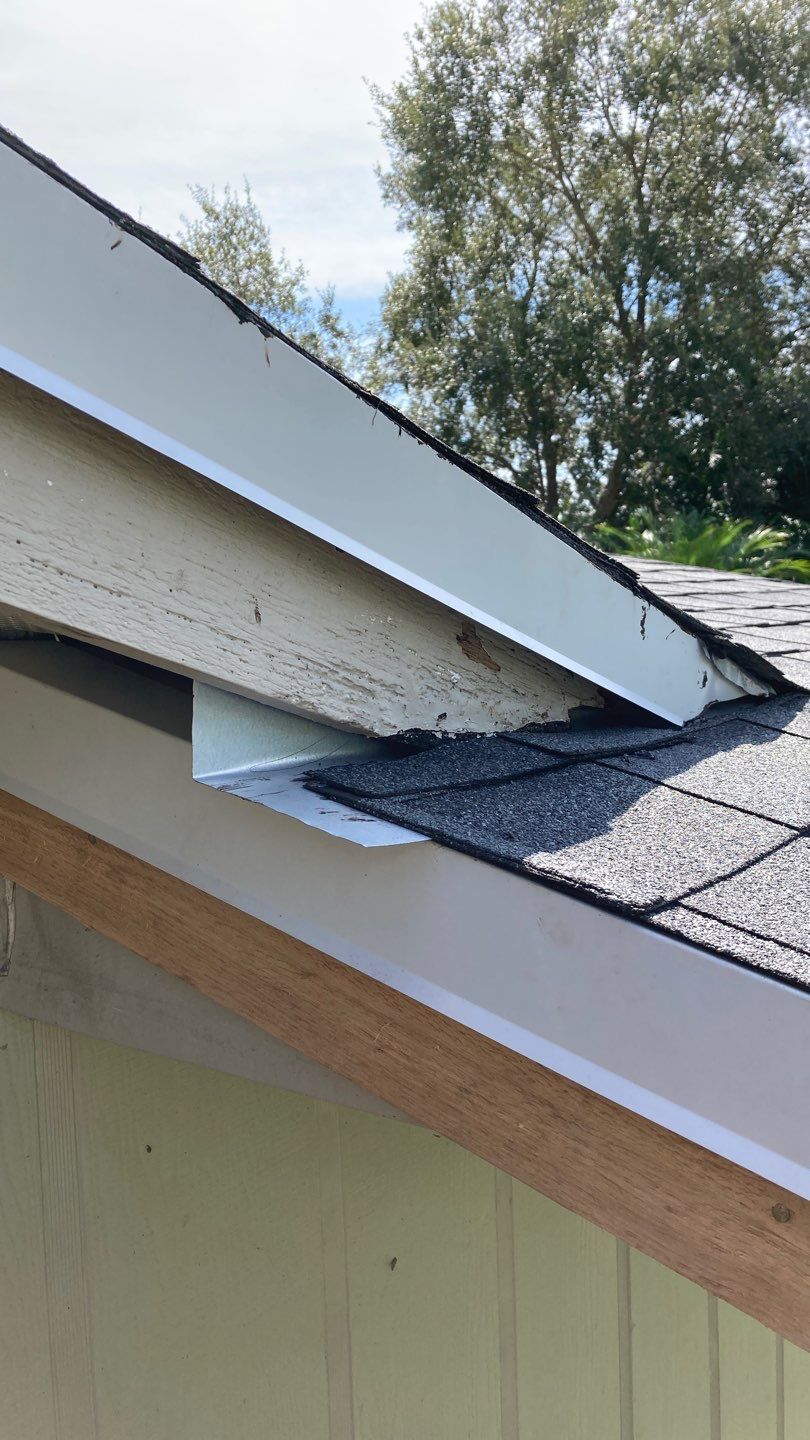
- Flashing. The metal strips sealing joints around chimneys, walls, skylights, and vents are the most common failure point on most roofs. Sealant dries out, metal shifts, and water finds the gap.
- Roof valleys. Where two roof planes meet, a large amount of water funnels through a narrow channel. Debris, wear, or poor installation here shows up fast.
- Plumbing and exhaust vent boots. The rubber collars around pipes crack under years of sun and heat long before the rest of the roof wears out.
- Damaged, lifted, or missing shingles or tiles. Wind lifts shingle edges and cracks or slips tiles, exposing the layer underneath.
- Exposed fasteners on metal roofs. The screws and rubber washers on corrugated or screw-down metal panels loosen and degrade over time.
- Skylights. The frame seals and surrounding flashing age faster than the glass.
- Drainage problems on flat roofs. Standing water, failed seams, and clogged drains are the usual culprits on low-slope roofs.
Step 1: Check the Attic First
If you can safely reach your attic, this is the single most useful step. Grab a flashlight and look for:
- Water stains or dark streaks on the underside of the roof deck or along the rafters
- Damp, matted, or discolored insulation
- Drip marks or mineral trails on beams, nails, or wiring
- Daylight coming through the roof boards (a clear sign of a gap)
- A musty smell or visible mold, which points to repeated moisture
Once you find a wet spot, trace it uphill. Follow the stain or dampness up along the rafters or decking toward the peak. The origin is usually at the highest point where you can still find moisture, and it often lines up with a roof feature like a vent, chimney, or valley.
Tip: Check right after rain, while things are still wet. A leak that’s been dry for a few days can be hard to see.
Step 2: Look at the Roof From the Ground
You don’t need to climb up. Walk around your home with a pair of binoculars and look for:
- Missing, cracked, curling, or lifted shingles
- Cracked, slipped, or missing tiles
- Flashing that looks bent, lifted, or pulling away from a wall or chimney
- Debris buildup in valleys or against walls
- Rust, loose panels, or exposed fasteners on metal roofing
- Anything that looks different from the rest of the roof
Match what you see outside to what you found in the attic. When a damaged area lines up with a wet spot, you’ve likely found your leak.
Step 3: The Water Test (With Caution)
If the source still isn’t clear, a roofer may use a controlled water test: running water over one small section of the roof at a time while someone inside watches for drips. Start low on the roof and work upward in short intervals, so you can tell exactly which section is responsible.
This is a two-person job and is genuinely best left to a professional. It requires someone on the roof or a safe vantage point, a wet roof surface, and the experience to read what’s happening. If you try a version of it from the ground, never let anyone walk on the roof while you do.
Roof Leak After Heavy Rain: What the Pattern Tells You
When a leak appears is a clue in itself:
- Only during heavy or wind-driven rain. Often points to flashing, vent boots, or tile and shingle edges where water is being pushed sideways under the roofing. Regular rainfall runs past these areas, but Florida storms force water into them.
- Constant drip during any rain. Suggests a more direct opening, like a missing shingle, cracked tile, or failed fastener.
- Appears hours or days after the rain. Water may be traveling slowly along the decking or soaking through insulation before it shows up inside.
- Stains with no recent rain. Could be condensation from poor attic ventilation, a plumbing line, or an HVAC drain, not the roof at all.
That last one matters. Not every ceiling stain is a roof leak. Condensation on cool ductwork or poorly ventilated attic surfaces can look identical. If the attic is damp but you can’t find an entry point outside, it’s worth having someone check ventilation and plumbing, too.
What to Do Right Now (Before the Roofer Arrives)
When water is coming in, the goal is to limit damage and keep everyone safe. In order:
- Protect people first. If water is near light fixtures, outlets, or ceiling fans, stay clear and turn off power to that area at the breaker panel. Water and electricity are the real emergency.
- Move belongings out of the way. Shift furniture, electronics, and rugs away from the drip.
- Catch the water. Place a bucket or container under the drip, with a towel or sheet of plastic underneath to protect the floor.
- Relieve a bulging ceiling carefully. If a ceiling is sagging with trapped water, a small hole in the lowest point (with a bucket directly underneath) can release it in a controlled way and prevent a larger collapse. Stand to the side, not underneath.
- Photograph and video everything. Capture the stains, the drips, the attic, and any visible exterior damage, with dates if you can. This helps your roofer and, if needed, your insurance claim.
- Stay off the roof. Wet shingles, tile, and metal are slippery, and tile and flat roofs can be damaged underfoot. A fall isn’t worth any repair.
- Call a roofer. The sooner the source is found, the smaller the repair tends to be.
If a storm caused the damage, a professional can also arrange a temporary cover to stop water entry until permanent repairs are done.
What Not to Do
- Don’t climb onto a wet roof to look for the leak yourself.
- Don’t cover a spot with roofing cement or sealant on a hunch. Guessing at the source can trap moisture, hide the real problem, and complicate the proper repair.
- Don’t ignore a small leak. Even a slow drip can saturate insulation, rot decking, and grow mold well before it becomes visible damage.
- Don’t make permanent repairs before documenting damage if you may file an insurance claim. Most policies expect reasonable steps to prevent further damage, but check yours for specifics.
When It’s a Repair and When It’s Something More
Most leaks come from one or two failed components and can be fixed with a targeted repair: new flashing, a replaced vent boot, a few tiles or shingles, resealed fasteners. A leak points to a bigger issue when:
- Water stains appear in several unrelated areas
- The decking feels soft or spongy
- The roof is near the end of its expected lifespan
- The same spot has been “fixed” more than once
A good roofer will tell you which situation you’re actually in, and won’t turn a simple repair into a replacement conversation.
What to Expect When Rhino Roofs Comes Out
We start where you did: finding the real source, not just the visible symptom. That means checking the attic, inspecting flashing, penetrations, and the roof surface, and showing you exactly what we found and why it matters. You get a clear explanation of the repair options, and if the answer is a small fix, that’s what we’ll recommend. If your leak is storm-related, we can also help document the damage for your insurance claim.
Schedule a Free Roof Inspection
Frequently Asked Questions
How do you find a roof leak?
Start in the attic with a flashlight, looking for water stains, damp insulation, or dark streaks on the rafters and decking. Trace the water uphill to where it enters, then compare that spot with the roof’s exterior, checking flashing, vents, valleys, and damaged shingles or tiles.
Why does my roof leak only after heavy rain?
Heavy or wind-driven rain can push water sideways and upward under shingles, tiles, and around flashing and vent boots, areas that stay dry in light rain. Leaks that show up only in storms often point to these details rather than a large hole.
What should I do if my roof is leaking right now?
Keep people safe and turn off power if water is near electrical fixtures, move belongings, catch the water with a bucket, photograph the damage, stay off the roof, and call a roofer. A professional can find the source and arrange a temporary cover if needed.
Can I find a roof leak from the outside only?
Sometimes, but it’s difficult. Water travels along the decking before dripping through, so the visible damage outside doesn’t always match the stain inside. Checking the attic and exterior together is far more reliable.
Is a ceiling stain always a roof leak?
No. Condensation from poor attic ventilation, plumbing lines, and HVAC drain issues can leave stains that look just like roof leaks. If you can’t find an entry point on the roof, those are worth ruling out.
Should I go on my roof to look for the leak?
No. Wet roofs are slippery and dangerous, and walking on tile, metal, or flat roofing can cause new damage. Use binoculars from the ground and let a professional handle the roof itself.
How fast should a roof leak be fixed?
As soon as reasonably possible. Even a slow leak can soak insulation, rot decking, and cause mold, and the damage grows the longer water keeps getting in.