Roofing Company for Hutchinson Island, FL
Hutchinson Island is 23 miles of barrier island. Direct ocean exposure on one side, the Indian River Lagoon on the other. Wind, salt spray, and humidity that doesn’t let up — and a mix of oceanfront condominiums, beach houses, and resort properties, all of them demanding roofing decisions that mainland homes don’t face the same way.
Rhino Roofs is headquartered in Fort Pierce, which sits at the northern end of the island. We serve both North and South Hutchinson Island, and we understand what this environment asks of a roof in a way that companies dispatching from an hour inland simply don’t.
If you’re a property owner, a condo board member, or a property manager evaluating your building’s roofing condition, this is a place to start.
Condo & HOA Roofing on Hutchinson Island
Island condominium buildings — many of them mid-rise structures built in the 1970s through the 1990s — present a category of roofing work that’s distinct from residential replacement. The scale is different. The decision-making process involves a board. The documentation requirements for insurance carriers are real and specific. And the systems involved: flat TPO membranes, modified bitumen, tile on lower-slope sections, metal mansard details — require a commercial contractor, not a residential one who occasionally takes on large jobs.
Rhino handles condo and HOA roofing projects across Hutchinson Island with a process designed for board-level decisions:
Building assessment and written report
Before any proposal is presented to a board, we conduct a thorough inspection and provide a written condition report. This is the document the board needs to make a sound decision — not a sales pitch, a fact-based assessment.
Board proposal support
We prepare scoped proposals appropriate for board review: clear scope of work, material specifications, phased schedule if the project spans sections of the building, and projected timeline. Boards can present this to their membership and to their insurance carrier.
Phased project scheduling
Large buildings don’t have to be fully offline during a re-roof. We plan and execute in phases that minimize disruption to residents.
Insurance and wind mitigation documentation
We provide full documentation at project completion — Wind Mitigation Reports, permit records, and material certifications. For island properties, this isn’t optional. It’s the record that protects the association’s coverage.
Beach House Roof Replacement & Repair
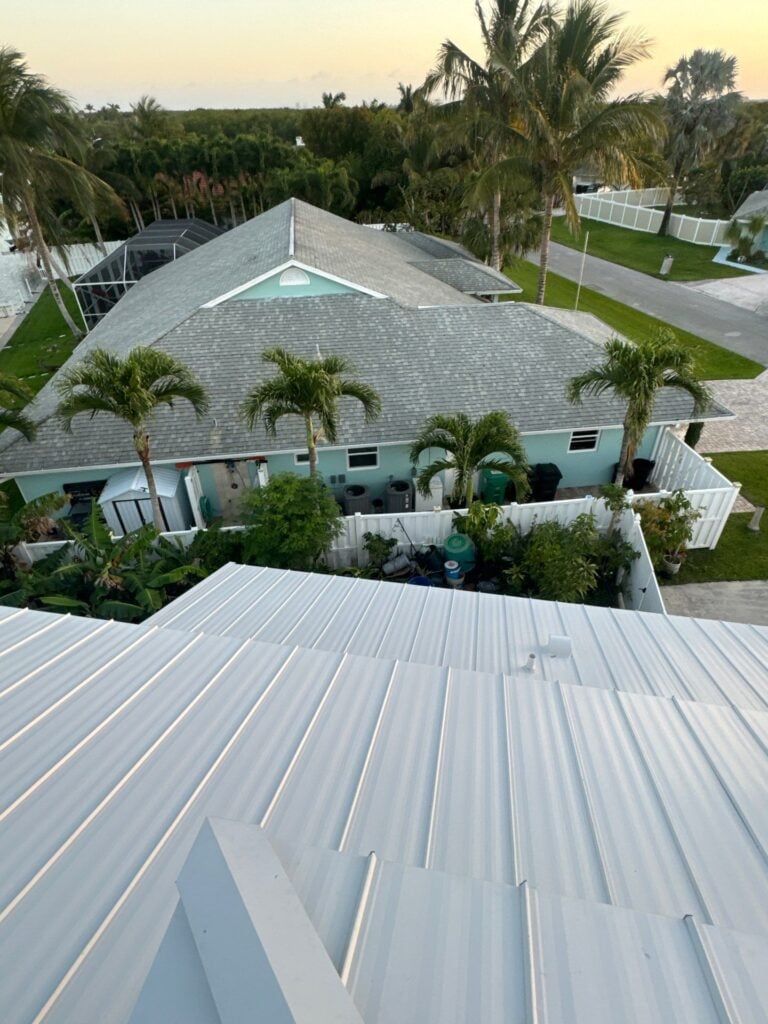
Beach house roofing on Hutchinson Island follows different logic than a mainland home. The salt air is more concentrated. The UV exposure is more direct. The wind load requirements under the Florida Building Code are higher — oceanfront homes in St. Lucie and Martin counties sit in enhanced wind exposure categories that affect both material requirements and installation specifications.
What this means practically: the same shingle system that performs well in Port St. Lucie for 25 years may show accelerated wear in a direct oceanfront environment in 15. Material selection on Hutchinson Island is a serious conversation, not a checkbox.
We handle repairs when they’re the right answer — localized tile damage, flashing failures, post-storm leaks — with the same honest assessment process we apply everywhere: inspect first, explain what we find, recommend what’s actually needed. See our storm damage and repair services.
Built for Barrier Island Conditions — Salt, Wind & Sun
Hutchinson Island’s roofing environment is the harshest in Rhino’s service area. It demands specific knowledge.
Salt air and material selection
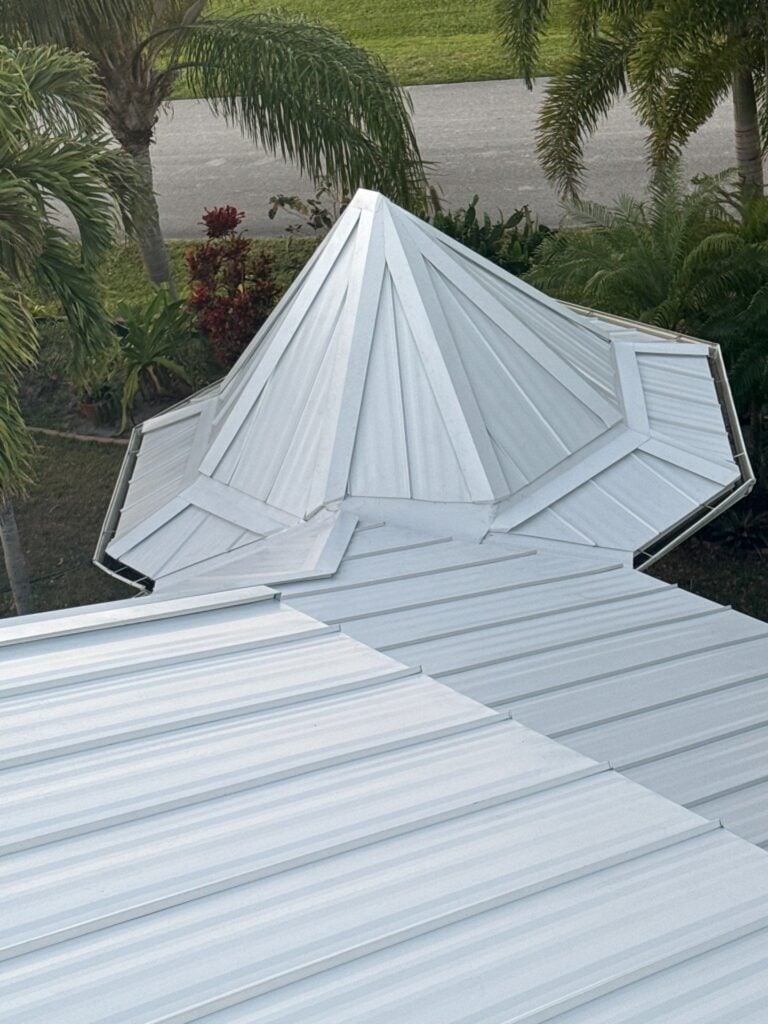
Direct ocean exposure creates an accelerated corrosion environment for any metal component in a roofing system: fasteners, flashing, drip edge, pipe boots, ridge caps. For homes and buildings within breaking-surf range, aluminum is the correct base metal. Aluminum is naturally corrosion-resistant; steel, even with protective Galvalume coatings, cannot match aluminum’s performance in sustained high-salinity exposure. Galvalume performs well in moderate coastal environments — set back from the water, with some buffer. For oceanfront, aluminum is the material that doesn’t require that calculation.
Wind exposure categories
Florida’s building code designates Hutchinson Island within a high-velocity wind zone. This affects minimum fastener patterns, underlayment specifications, and how roofing systems are installed at edges and penetrations. Every Rhino installation on the island is engineered and permitted to these specifications — not adapted from a mainland standard.
Flat roof performance in a marine environment
Condo and resort buildings on the island with flat or low-slope roofing require membranes and adhesives rated for high UV, high humidity, and salt-laden air. TPO systems in white are the standard recommendation — reflective, algae-resistant, and appropriately rated for the exposure. Modified bitumen is also used where building structure and drainage characteristics make it the better fit.
Why Island Property Owners Choose Rhino Roofs
Island properties are not the right job for every contractor. The conditions are specific. The documentation requirements for insurance are real. The material decisions carry more consequence than they do a few miles inland.
Here’s what matters to Hutchinson Island property owners specifically:
We document everything
Wind Mitigation Reports, permit records, material certifications, and inspection reports are provided at completion on every project. For insurance carriers writing policies on island properties, this documentation is often the difference between coverage and a gap.
In-house crews only.
No subcontractors on Hutchinson Island or anywhere else. The people installing your roof are Rhino employees — accountable to Rhino’s standards and to you.
Material decisions are made deliberately
We don’t install the same system on an oceanfront condo that we install on a PSL neighborhood home. The environment dictates the specification.
We've worked in this environment
Coastal exposure — salt air, wind zones, enhanced uplift requirements — is something we build into every recommendation, not something we learn about after the project starts.
Board-ready proposals
For condo associations and HOAs, we prepare documentation appropriate for board review. Scope, specs, phasing, timeline, and cost — organized for a decision-making process, not a one-on-one sales conversation.
North & South Hutchinson Island Areas We Serve
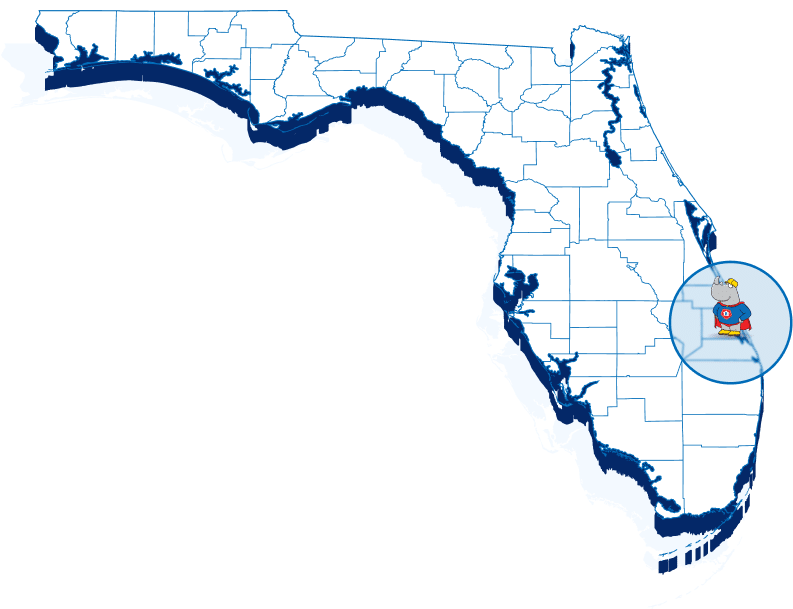
Hutchinson Island is divided geographically, and the communities on each end have different access points and different county permitting jurisdictions.
North Hutchinson Island (Fort Pierce / St. Lucie County)
This is Rhino's home territory. We're minutes from the northern end of the island. Condo communities, beach houses, and resort properties in this area are served with St. Lucie County permitting handled by us.
Both sides of the island are regular service areas.
The jurisdictional difference in permitting is managed by Rhino — it doesn't fall on the property owner or board.
South Hutchinson Island (Jensen Beach / Stuart / Martin County)
The communities along NE Ocean Boulevard and down through Stuart's barrier island section. Ocean Village, Islandia, and the resort corridor properties. Martin County permitting applies here, and we handle it.
Hutchinson Island Roofing FAQs
Do you handle condo association re-roofs on Hutchinson Island?
Yes. We work with condo associations and property managers on full building re-roofs, phased replacement programs, and assessment-to-proposal processes. We provide written condition reports, board-appropriate proposals, and complete documentation at project completion including Wind Mitigation Reports and permit records. If your association is in the early stages of evaluating your building’s roof, a no-cost assessment is the right starting point. Request a board proposal here.
What roofing material handles salt air best on Hutchinson Island?
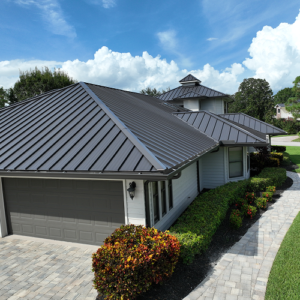
For direct oceanfront exposure, aluminum-based standing seam metal and clay tile are the most durable long-term options. Aluminum is naturally corrosion-resistant; steel systems, including Galvalume, require more buffer from the ocean to perform comparably. For mid-rise condo flat roofs, TPO membrane systems in white are the standard — rated for high UV, high humidity, and salt-air conditions. Material selection on the island is a serious conversation. We have it on every estimate.
How do island wind zones affect my roof?
Hutchinson Island falls within Florida’s high-velocity wind zone designations, which require enhanced fastener patterns, specific underlayment specifications, and additional engineering at roof edges and penetrations. These are code requirements, not upgrades. Every Rhino installation on the island is permitted and inspected to these standards. The Wind Mitigation Report we provide at completion documents this for your insurance carrier.
Can you document everything for our insurance carrier?
Yes. Wind Mitigation Reports, permit records, material certifications, and inspection documentation are provided at completion on every project. For island properties — where insurance carrier requirements are often more rigorous than the mainland — this documentation package is standard, not optional. We build it into the process from the start.
Request an Assessment for Your Hutchinson Island Property
Whether you’re a homeowner, a condo board member, or a property manager, the right starting point is a professional inspection with a written report — not a phone estimate or a ballpark based on square footage.
We’ll assess the full system, document what we find, and give you a clear picture of what the roof needs and what it will cost. No pressure. No pitch. Just an honest report from a team that understands this specific environment.
Call or text (772) 446-1139, request a board proposal, or schedule a property assessment online.
Where Tough Roofs Meet Happy Homes.